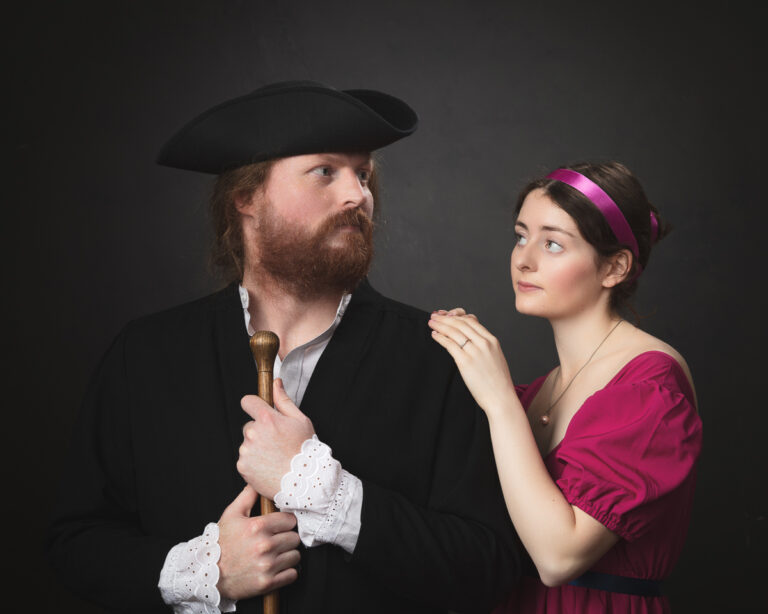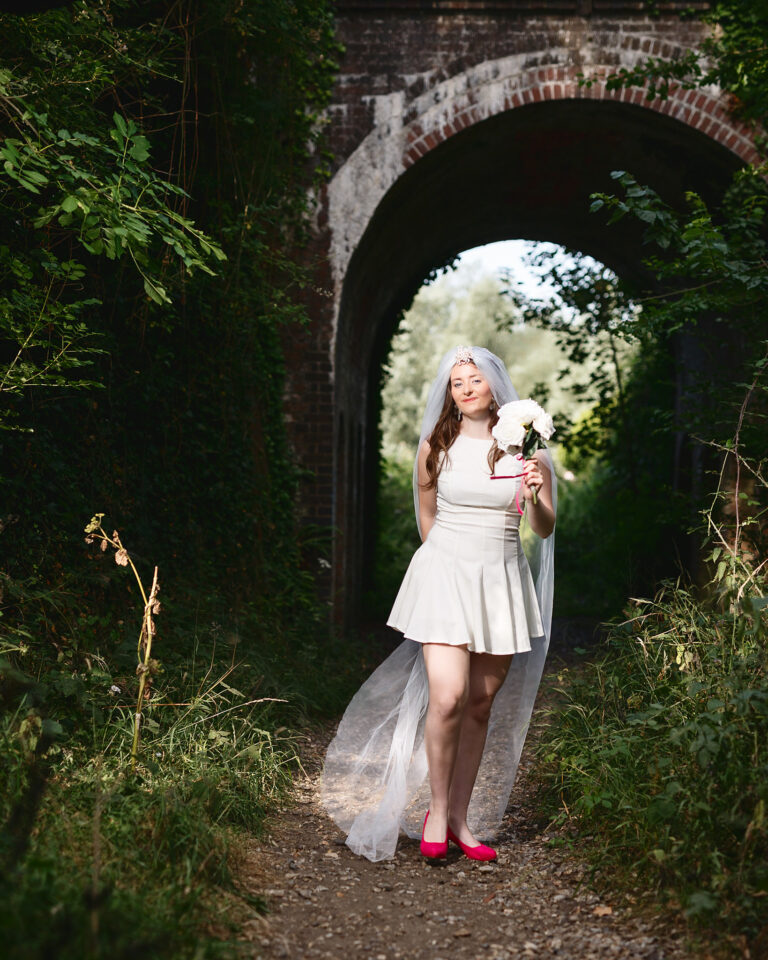
Valentine Dresses in the Studio: An Elegant Exposures Test Shoot with Sophia
I photographed this Valentine dress series as part of my personal project, Elegant Exposures. Susan Hardy styled the looks, and Sophia modelled. We kept it in the studio with simple backgrounds, because the focus needed to stay on the dresses, the silhouette, and the small styling details that make an image feel complete.
This was a test shoot, and test shoots are where I build new ideas without pressure. Lighting practice is part of it, but the bigger benefit is creative. I can try different moods, poses and styling choices without needing a fixed outcome at the end of the day.
When the stakes are lower, everyone makes braver decisions. You try things that might fail, you learn faster, and the images usually feel more honest for it.
The brief: simple backgrounds and a clear theme
The concept was three Valentine dresses, all led by red, photographed cleanly against simple backgrounds. No set dressing and no props fighting for attention, just the wardrobe and the person wearing it.
A simple background sounds easy, but it demands more discipline. A clean set hides nothing. A lazy pose, a dress sitting badly, light slightly off, you see all of it. That is why I like working this way for Elegant Exposures. The styling becomes the story, not the scene.
It also keeps the images flexible. With a quiet background the eye goes to expression, fabric and shape, which is exactly what I wanted here.
Why test shoots matter
A good test shoot answers questions. The technical side is useful, but the creative side is where the longer-term progress happens.
A test shoot gives me:
- Freedom to explore without a fixed “client outcome”
- Time to refine posing slowly, rather than rushing through variations
- Space for a stylist and model to experiment and find what feels right
- A chance to test narrative cues, such as props, jewellery, and gesture
- The ability to discover what reads well on camera, not just in real life
On paid work, I rely on methods that I already know will deliver. On a test shoot, I can do the opposite. I can start with a baseline that works, then deliberately push away from it to see what changes the mood.
It also improves collaboration. Susan and I build shared references through sessions like this. We learn which fabrics behave well under studio light, which accessories add to the story, and which ones distract. Sophia learns what shapes photograph best with each dress. I learn how her expression shifts the feel of a look, even when nothing else changes.
That shared shorthand is the real value. It makes every future shoot smoother.
Keeping the studio simple makes the styling work harder
With the background stripped back, the wardrobe and styling carry more weight. The dress has to hold attention on its own, the pose has to feel purposeful and the expression has to belong in the frame.
It is good discipline for me too. There is nowhere to hide behind visual noise.
In practical terms, “simple” meant:
- A clean backdrop that supports red tones without colour contamination
- A lighting approach that keeps skin flattering and fabric honest
- A shooting pace that allows adjustments to be precise, not rushed
- Enough variation in pose and framing to create a set, not repeats
If you have ever looked at an image and felt it was busy, too many elements were fighting for attention. Here we gave the viewer one subject: Sophia in the dress.
Dress 1: Late 1700s peasant style, white and red cotton with heart details
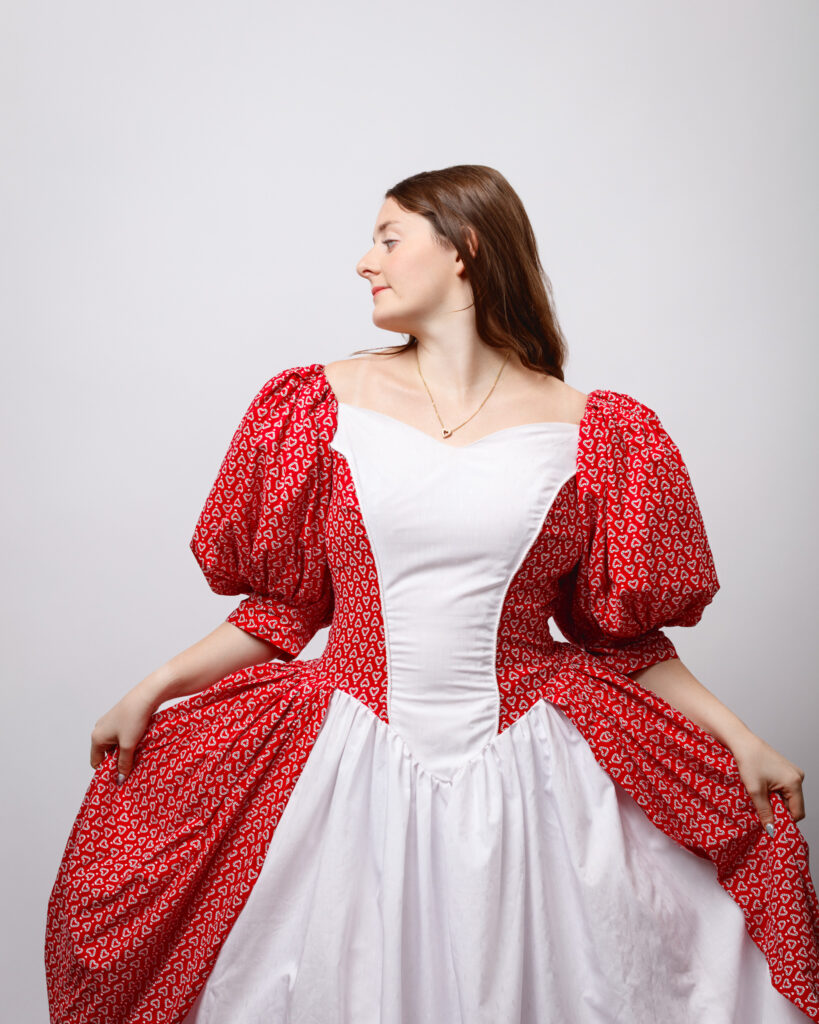
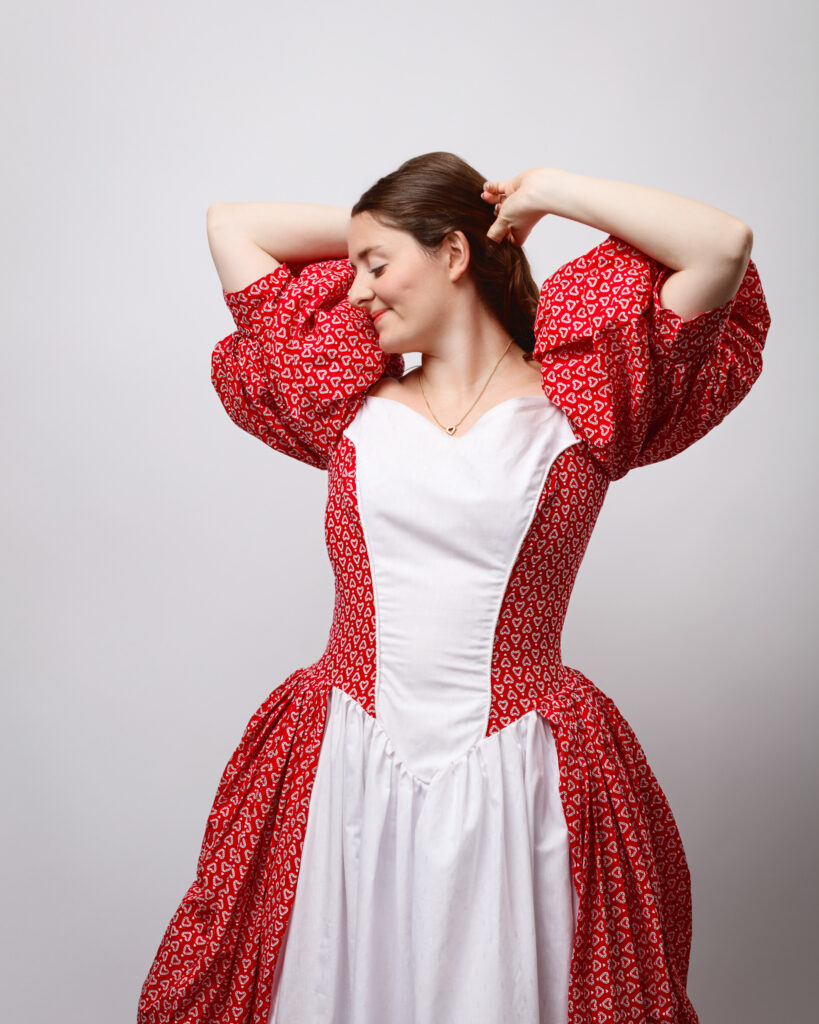
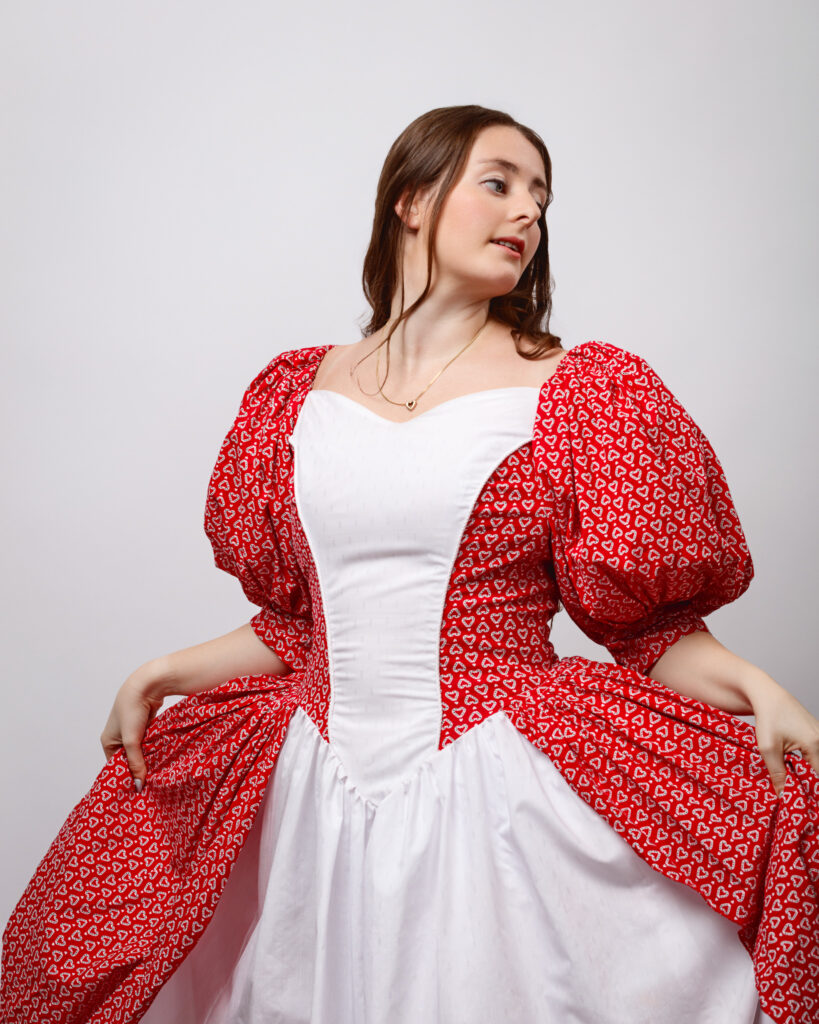
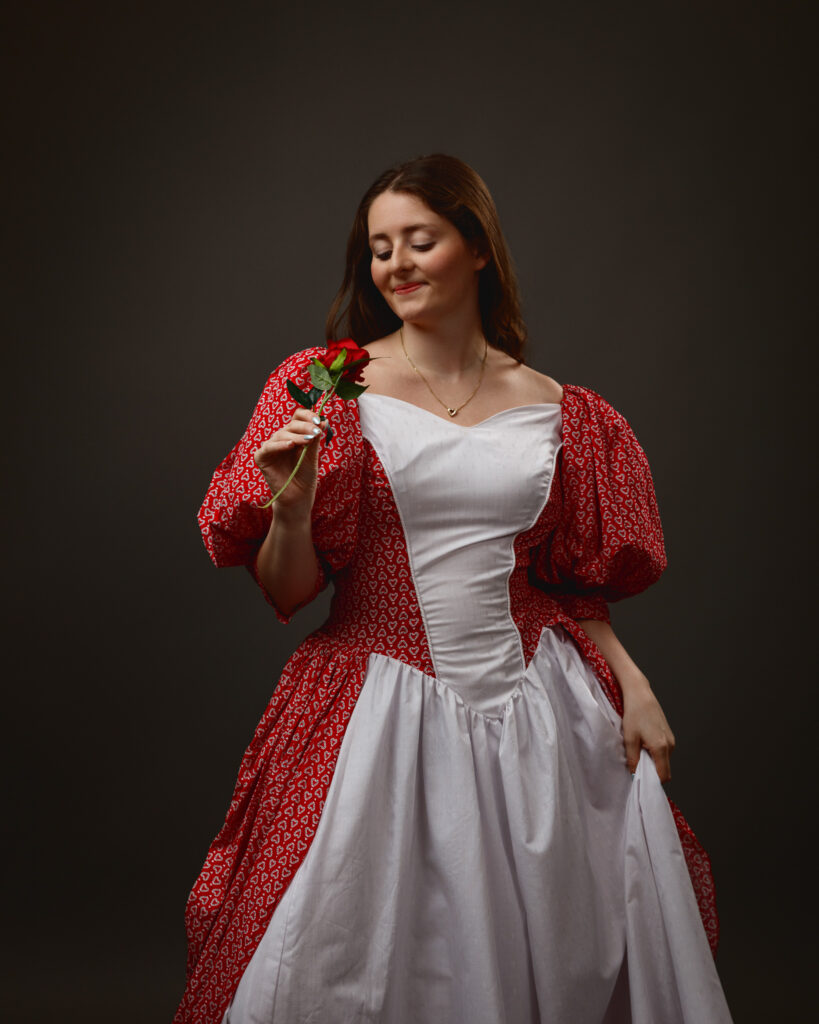
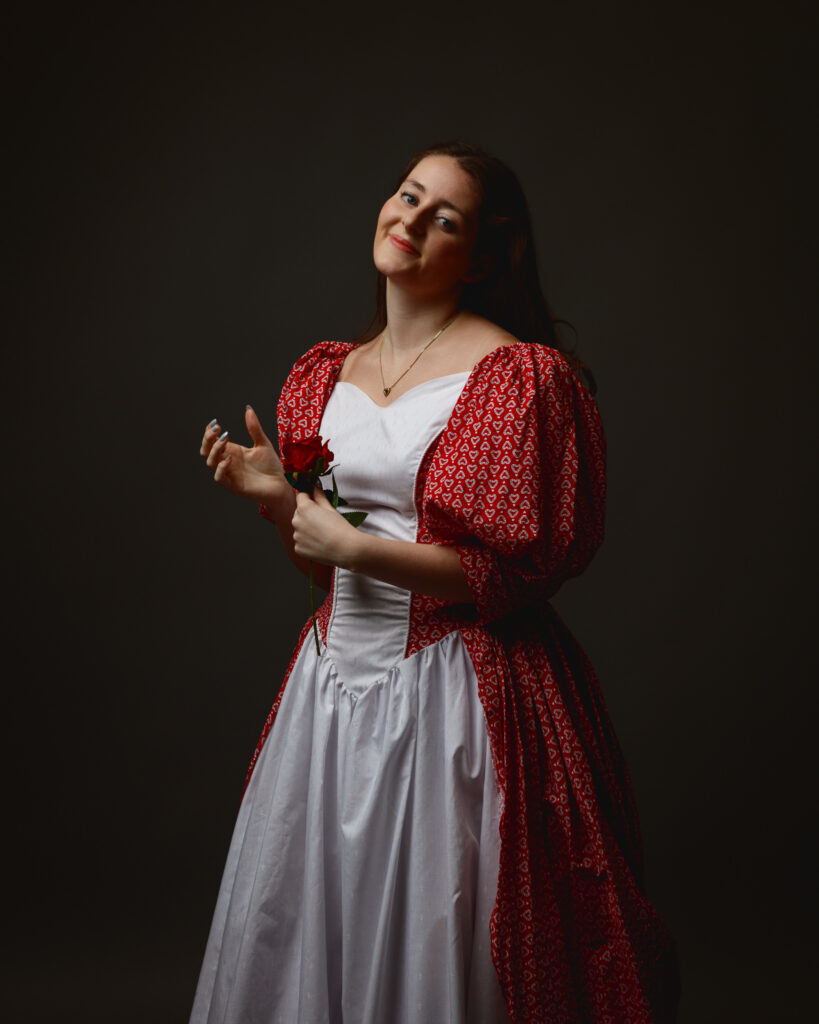
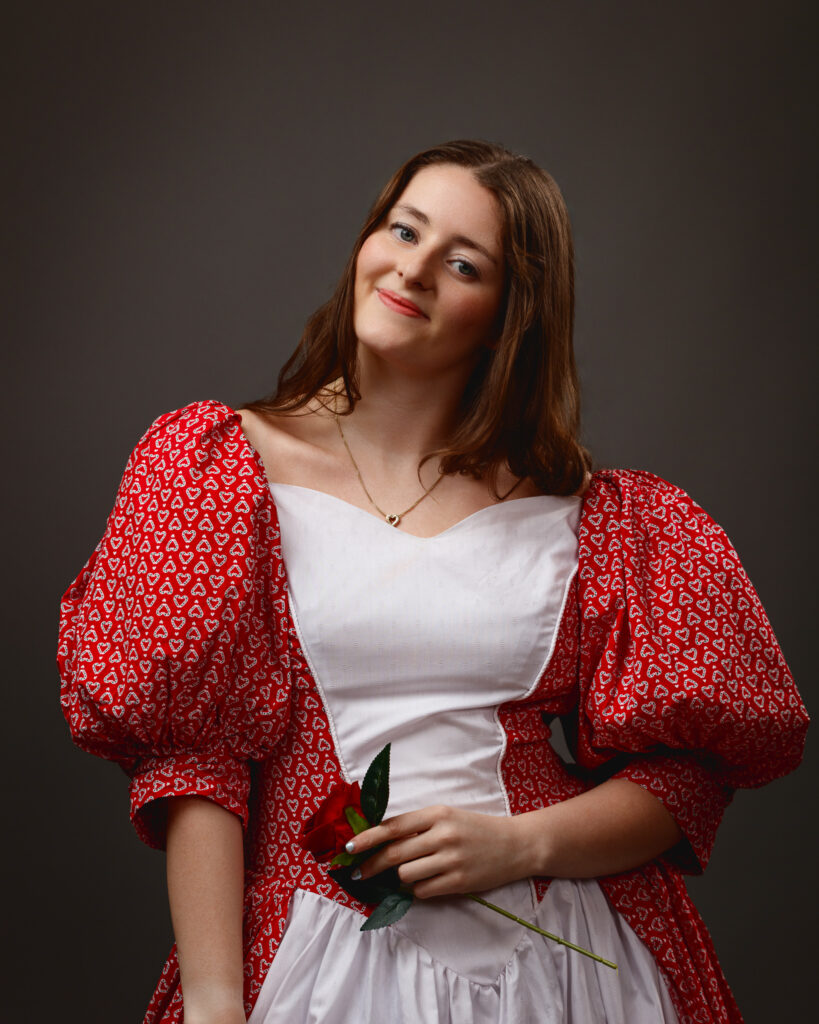
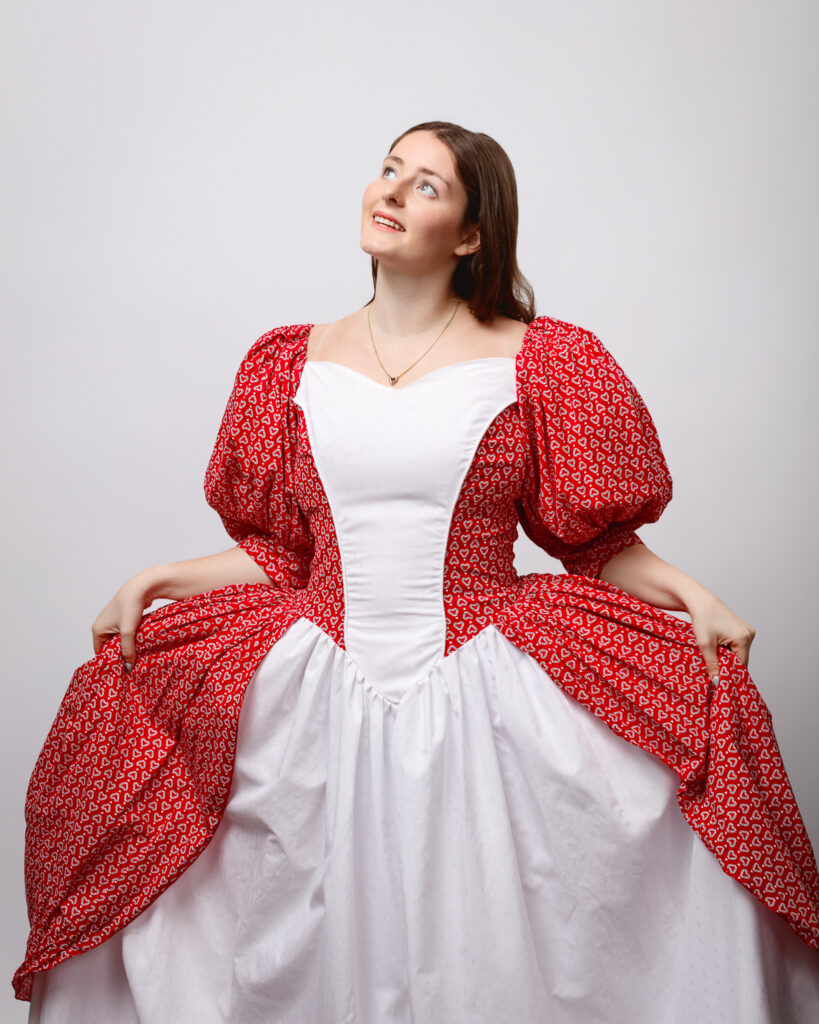
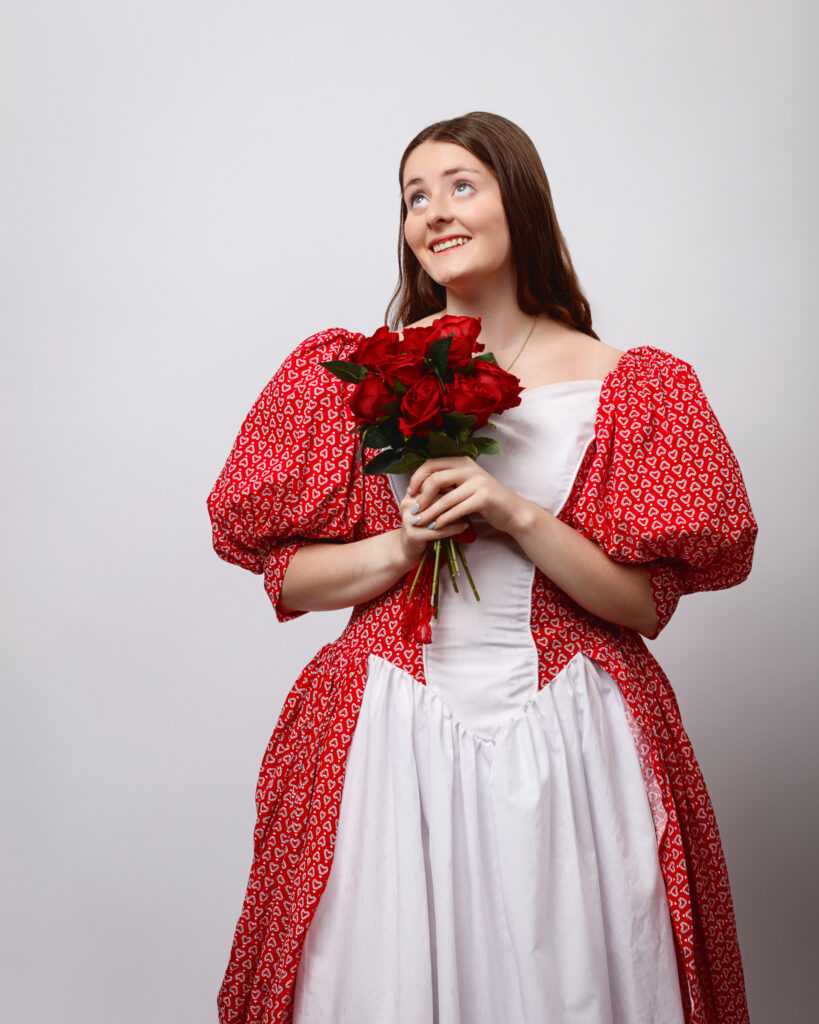
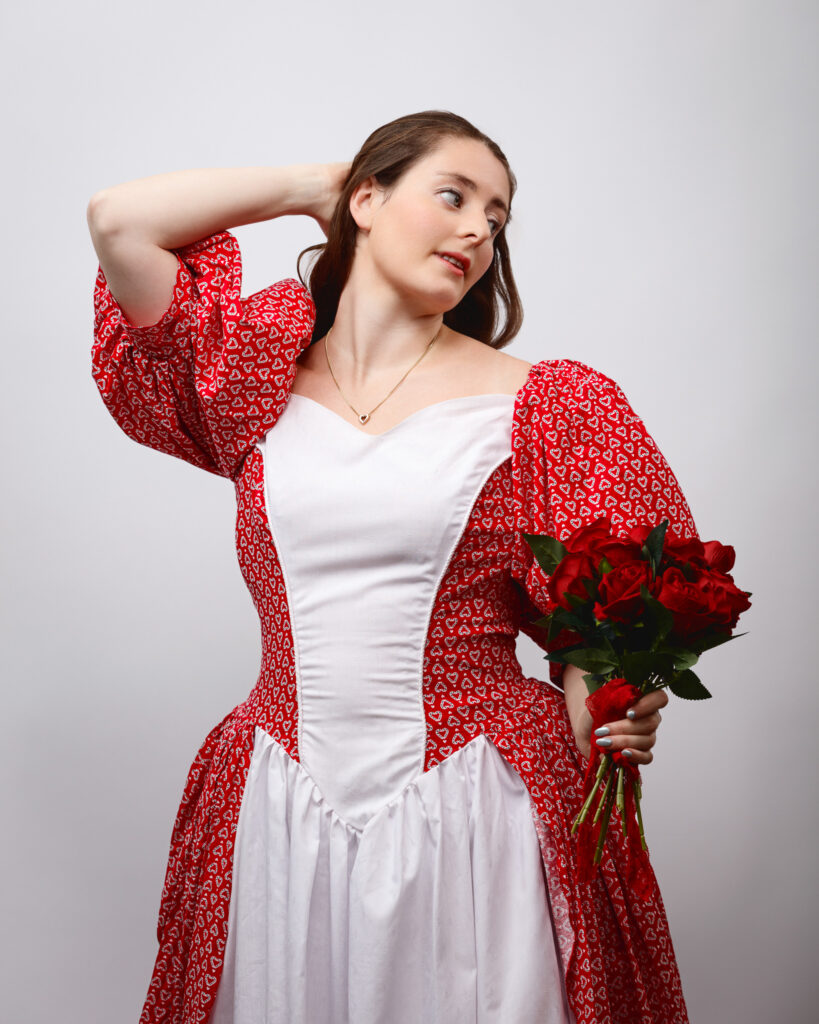
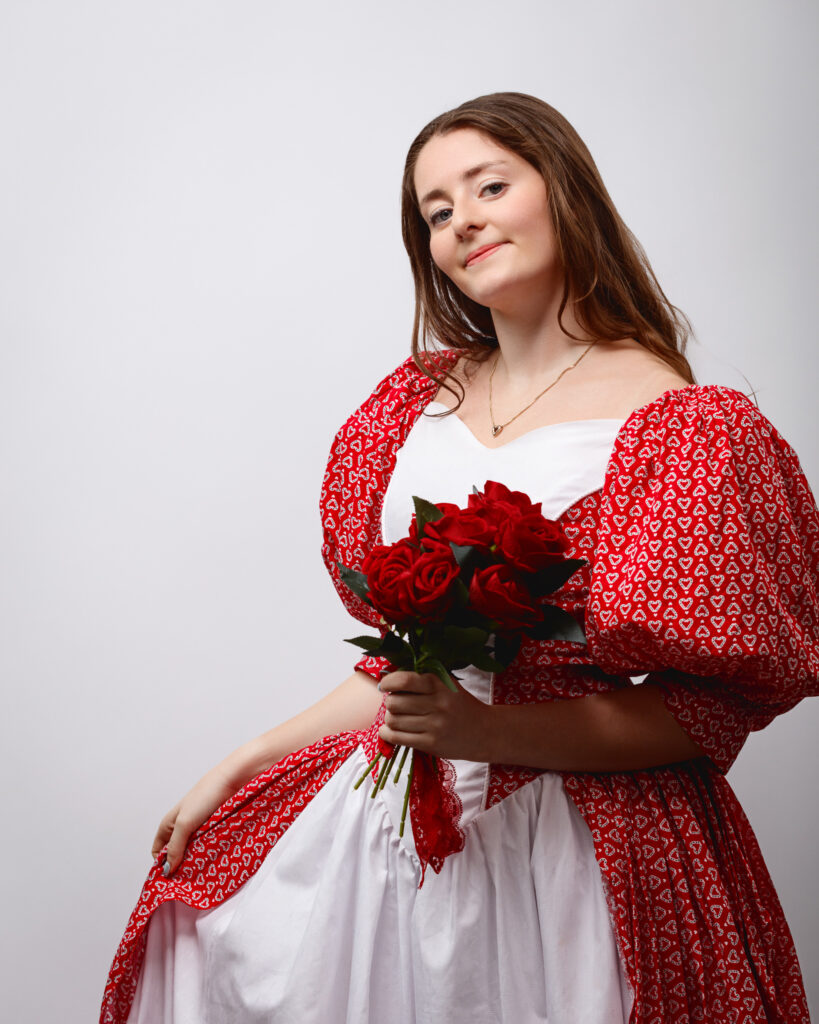
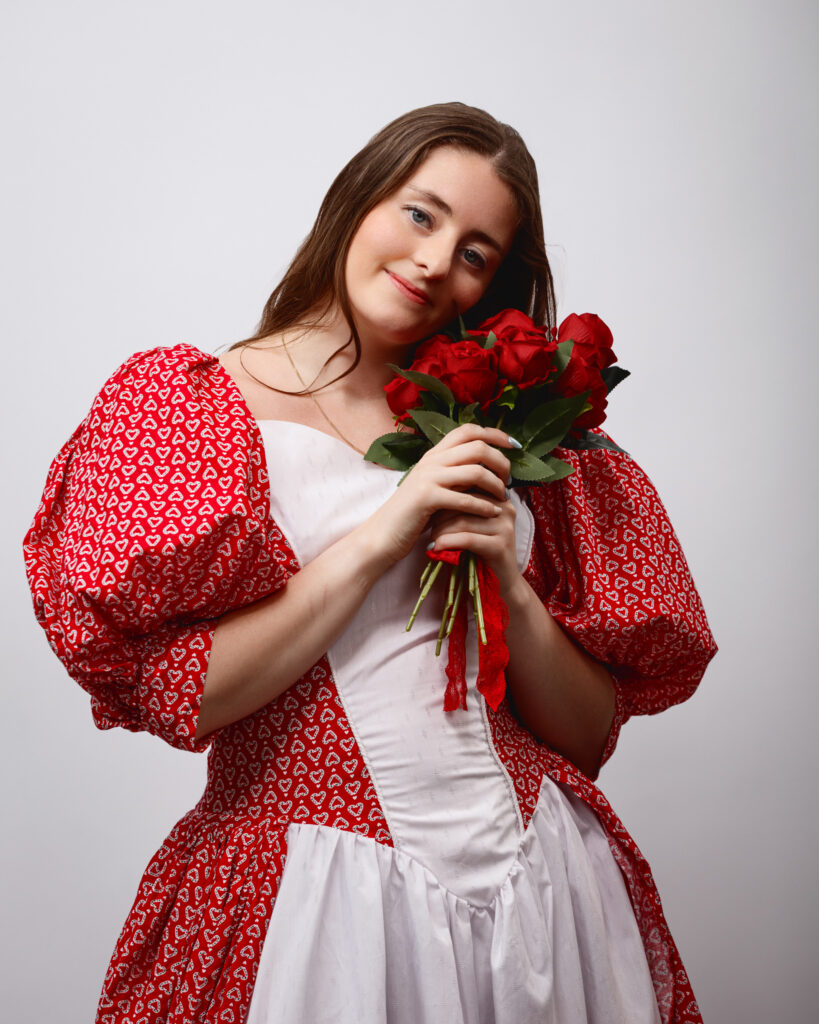
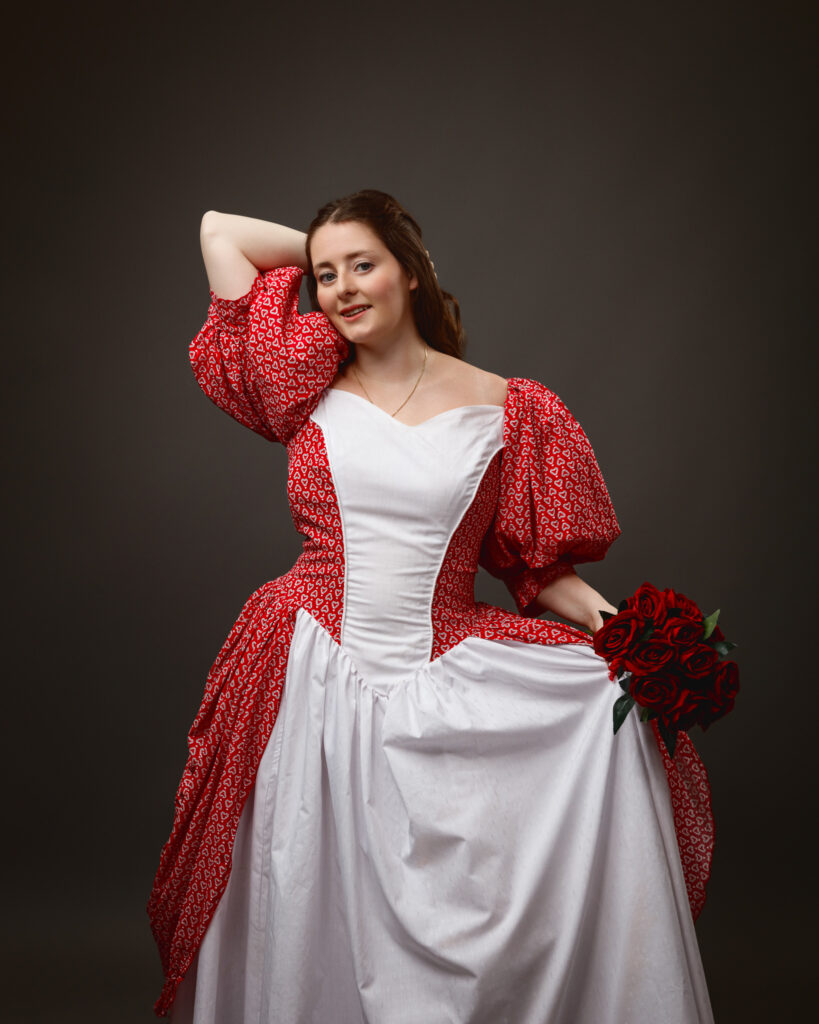
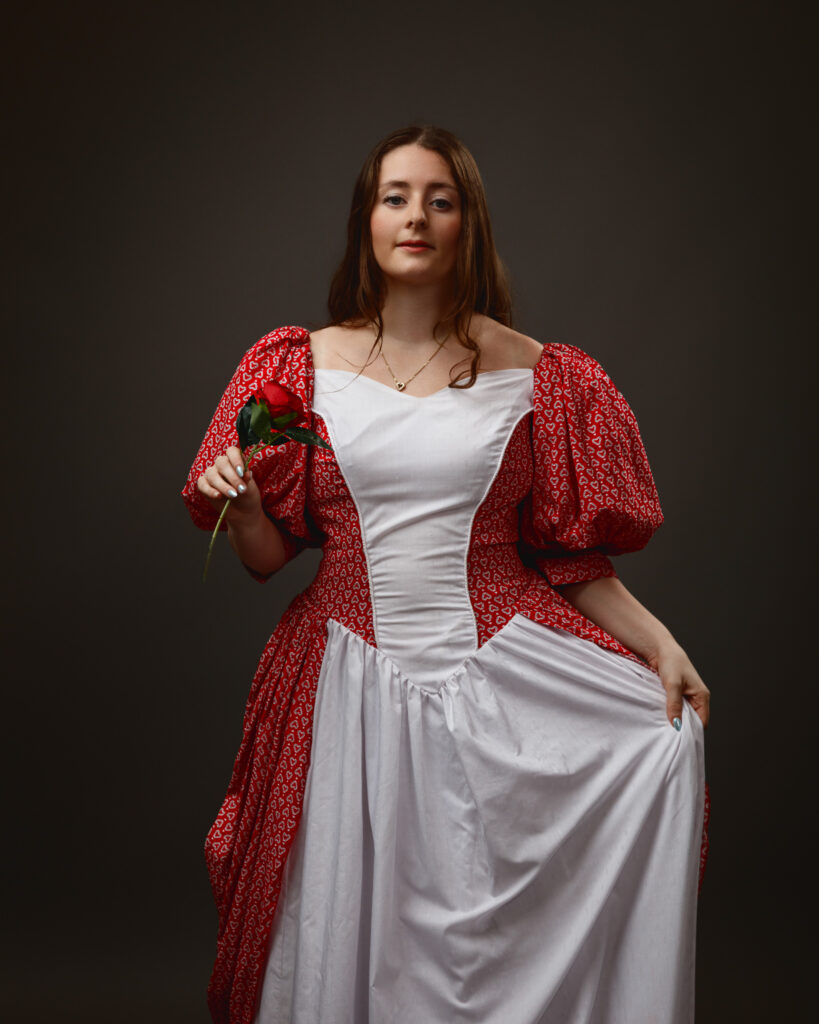
The first dress had a late 1700s peasant style feel. It was white and red cotton, with a red heart pattern on the sleeves and side panels. The dress was lined with petticoats, which matters a lot in studio portraits.
Petticoats change how a garment photographs. They give structure. They help fabric fall in a more predictable way. They add volume without needing movement. Even in a still pose, the skirt holds shape and reads as intentional.
Sophia wore a simple gold heart locket with this dress. That small detail anchored the Valentine theme without turning it into a costume. I like jewellery choices like this. They feel personal. They also give the model a natural action, such as touching the locket lightly, resting a hand near the neckline, or using the chain as a subtle line in the frame.
For this set, the mood was calm and classic. The dress has period cues, so I kept the posing gentle. I avoided anything too modern in posture. A strong, contemporary stance can make period-inspired styling feel like fancy dress. Softer lines and quieter expression help the look feel believable.
This dress also had a nice contrast balance. The white areas held light well, while the red detailing added rhythm. It gave me a lot to work with in close portraits and wider frames.
Dress 2: Red cotton sleeveless dress with net petticoats and bold red accents
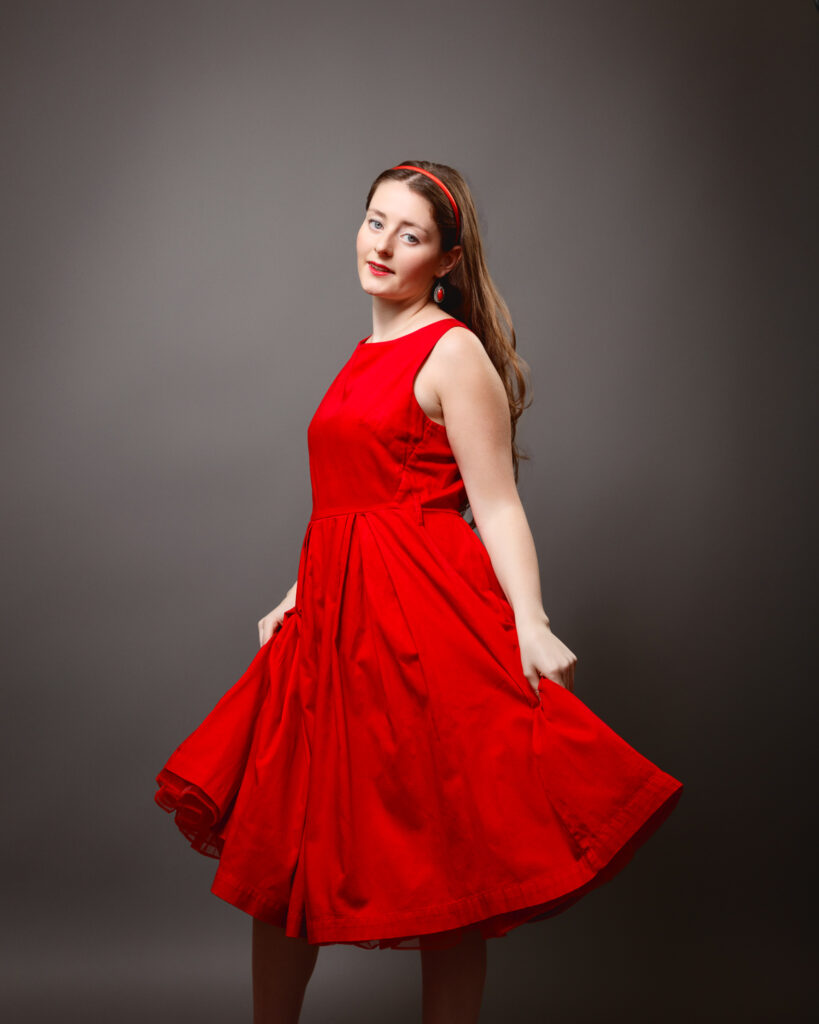
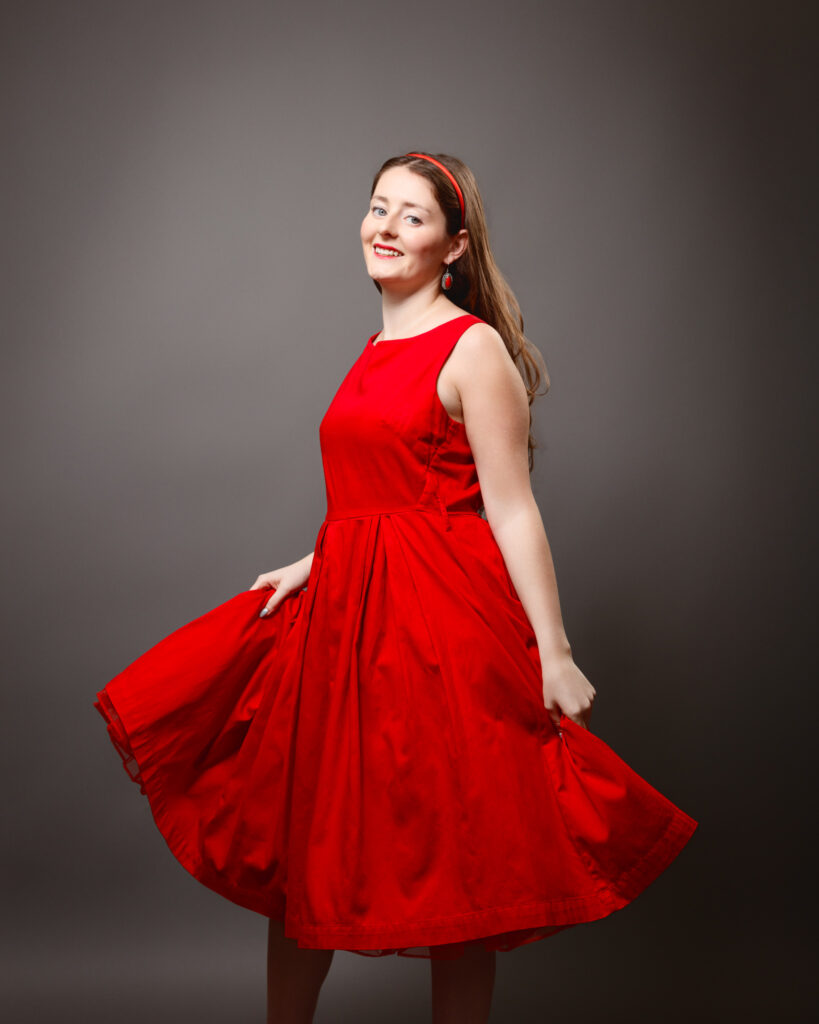
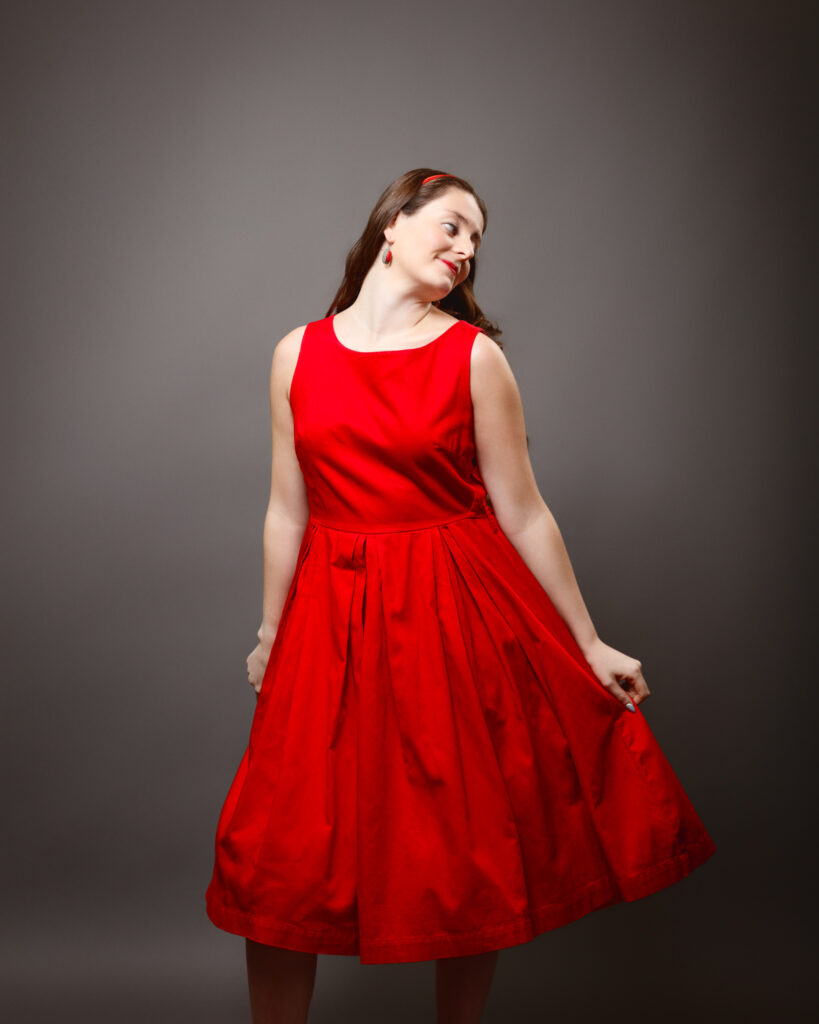
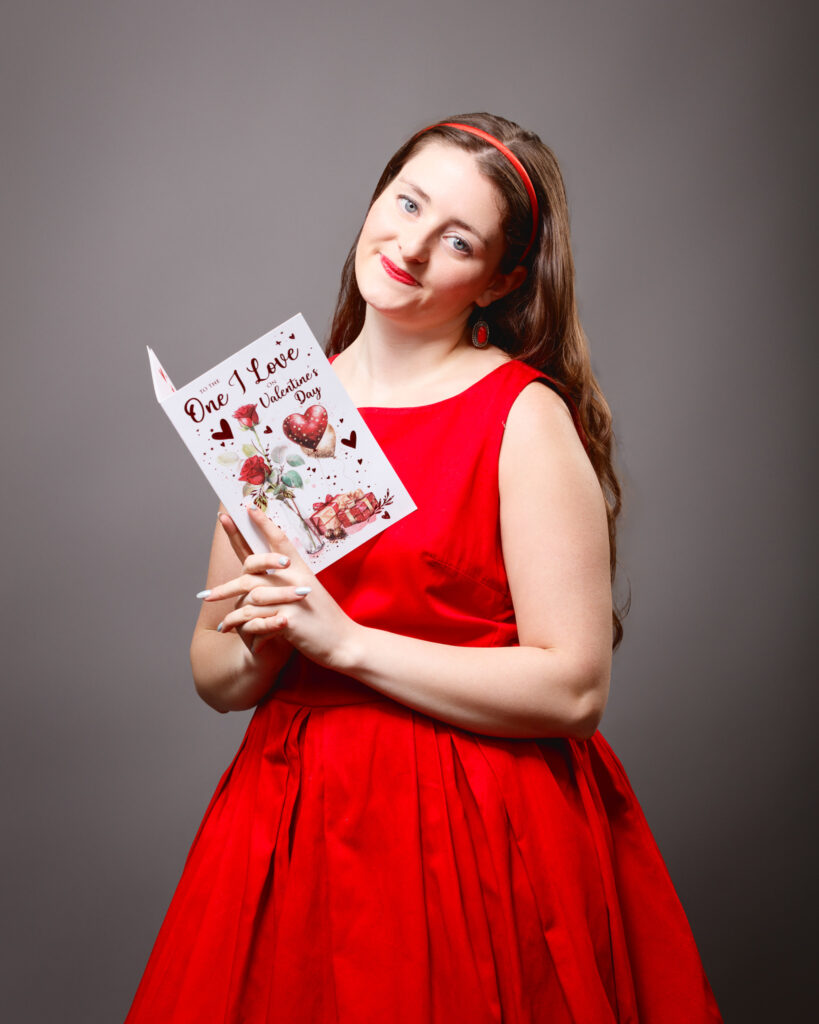
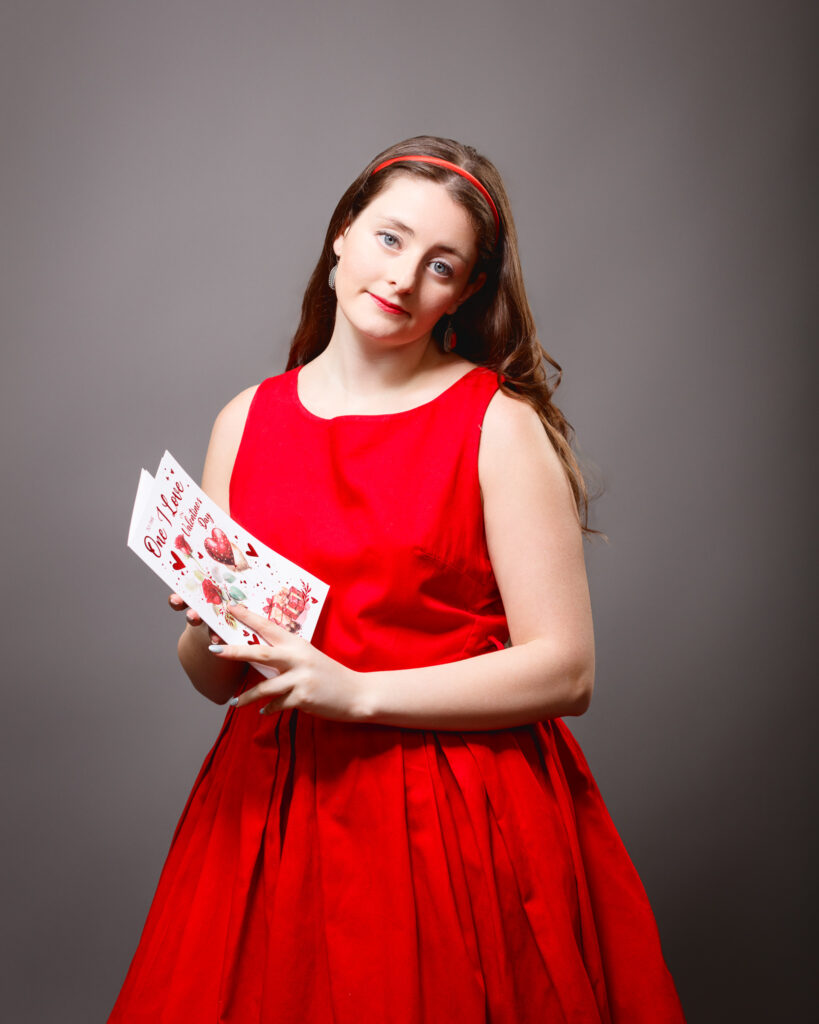
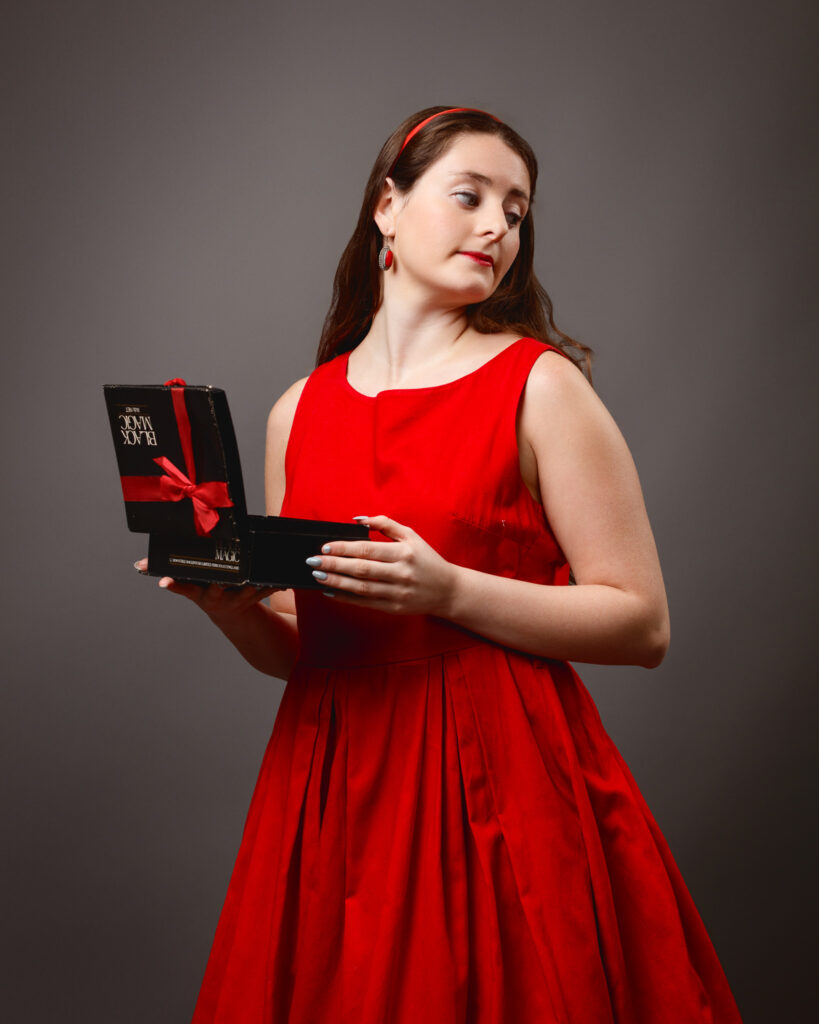
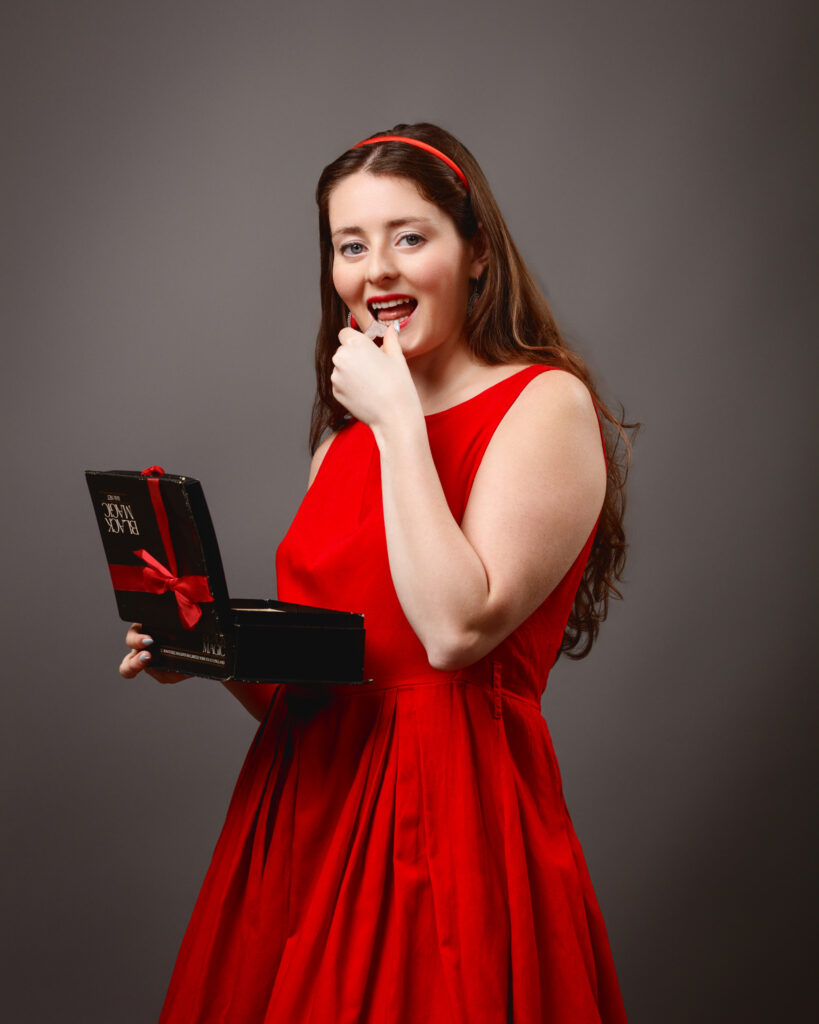
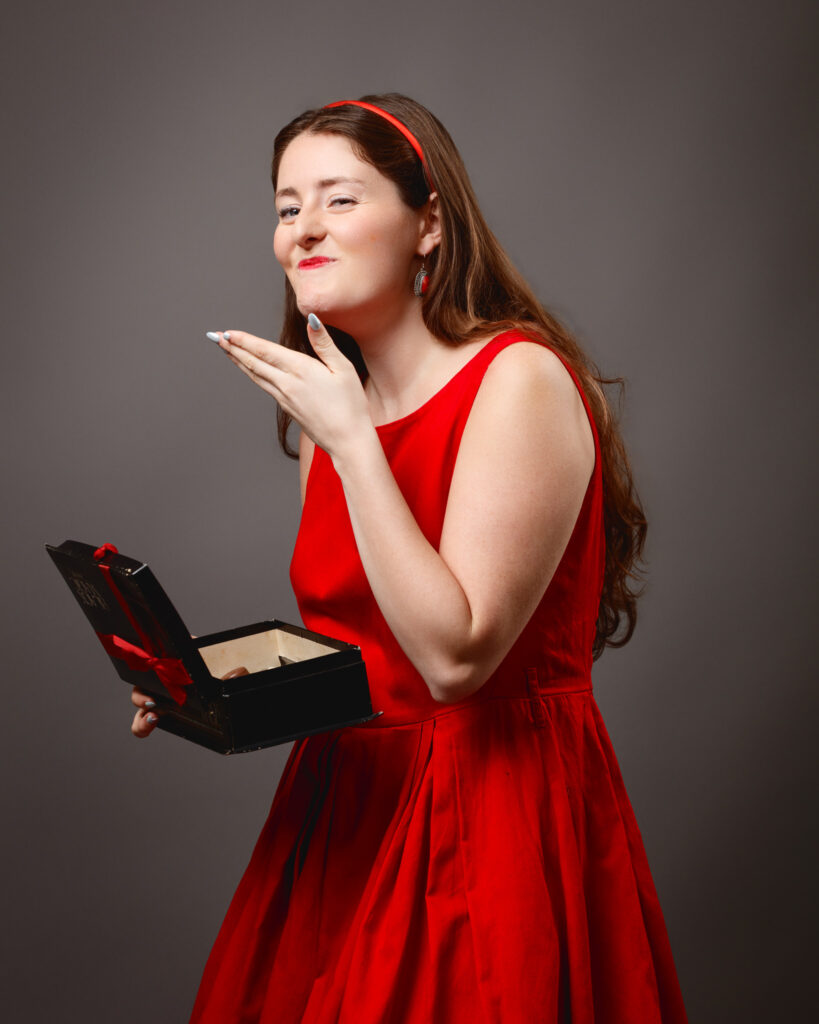
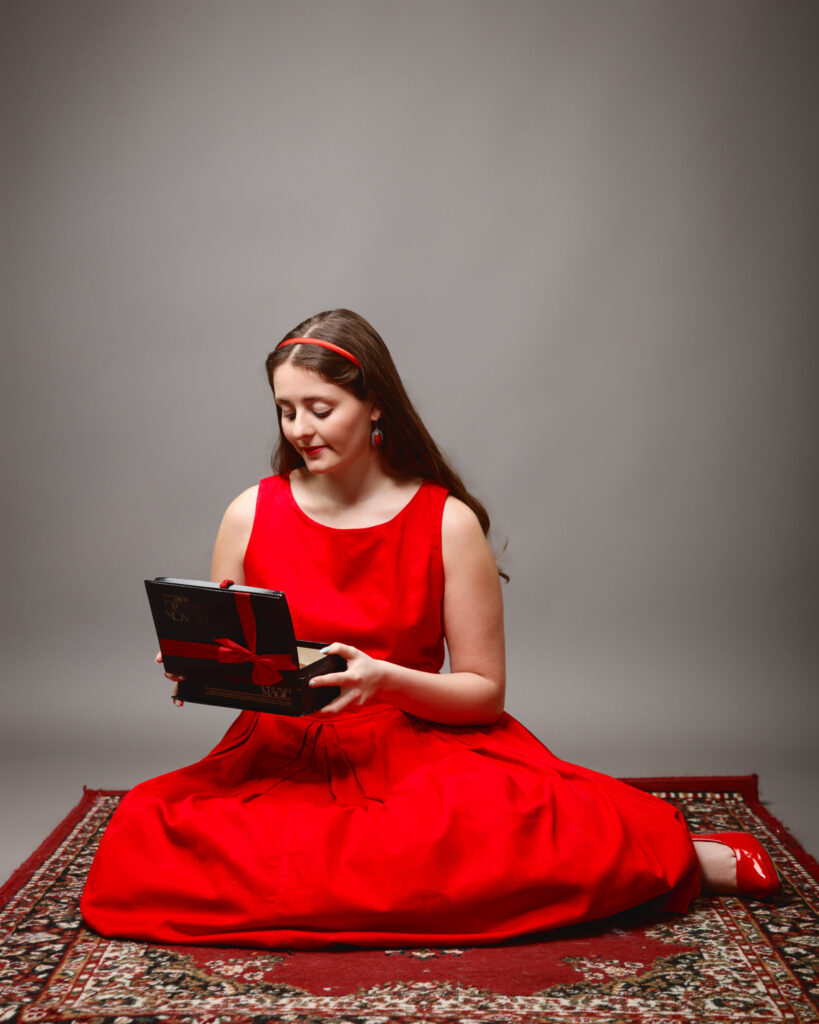
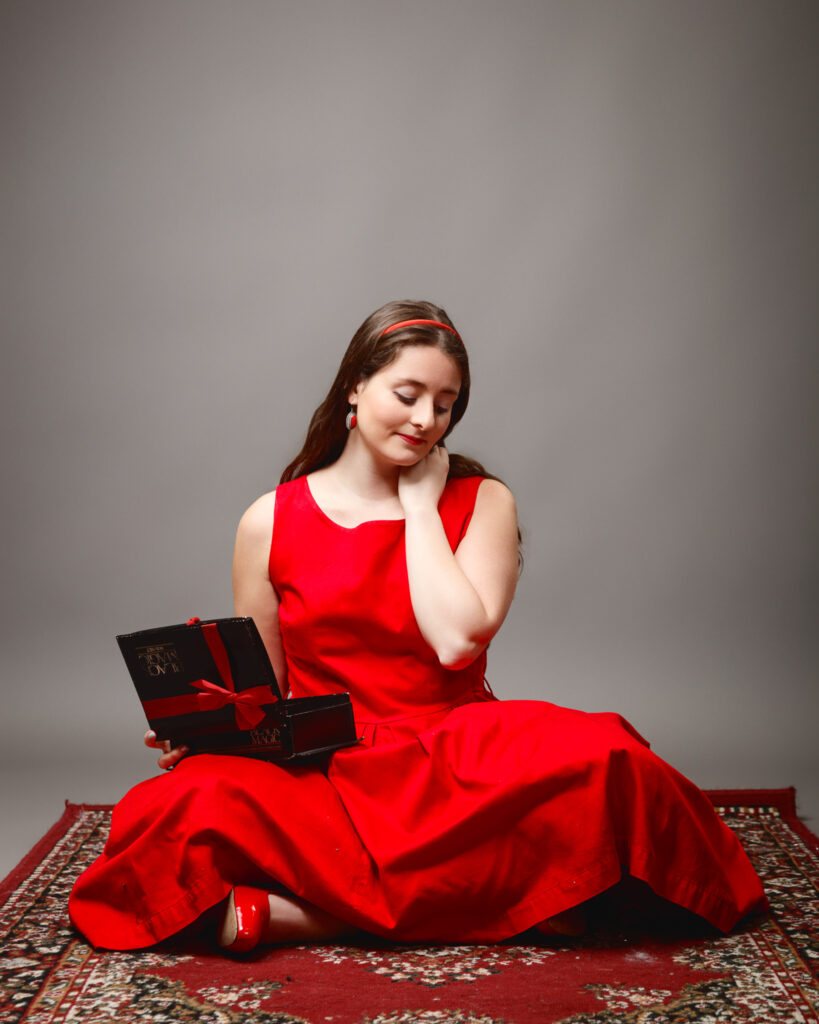
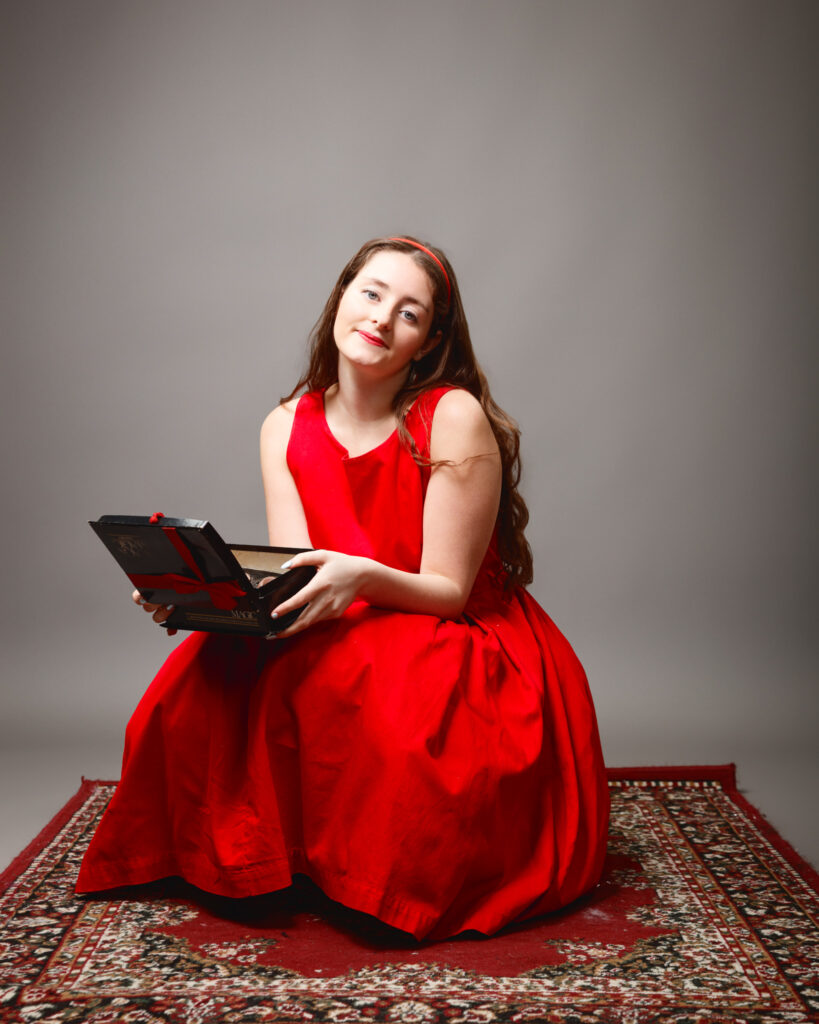
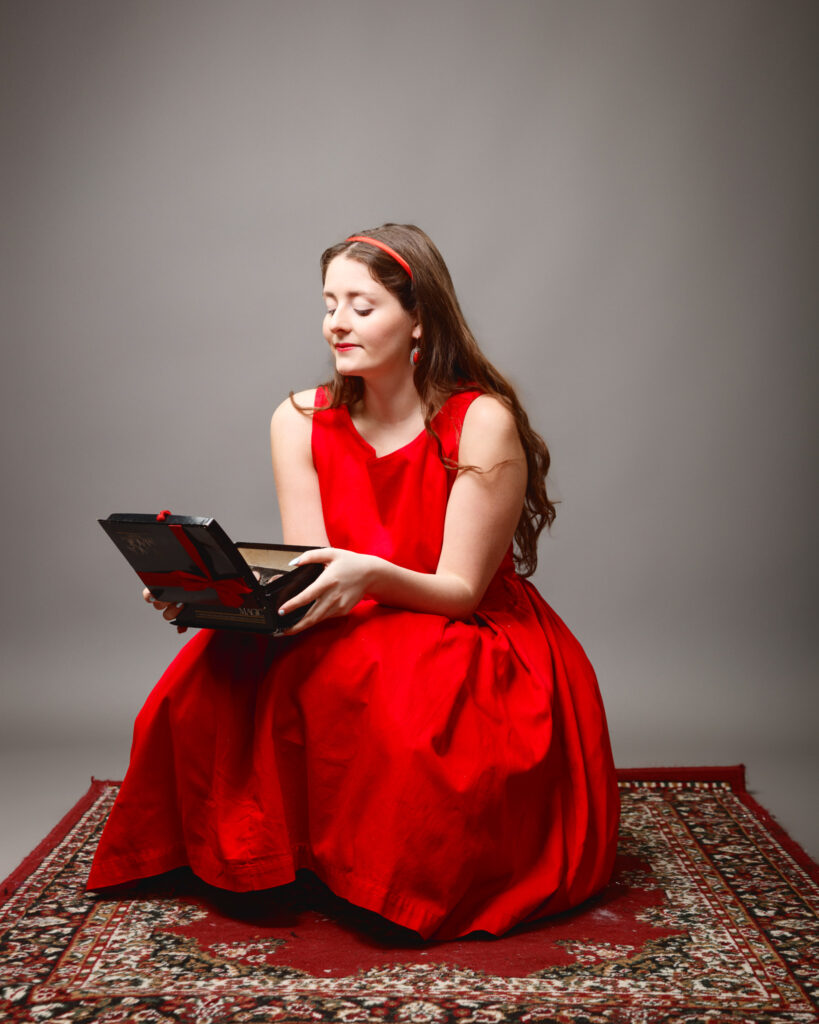
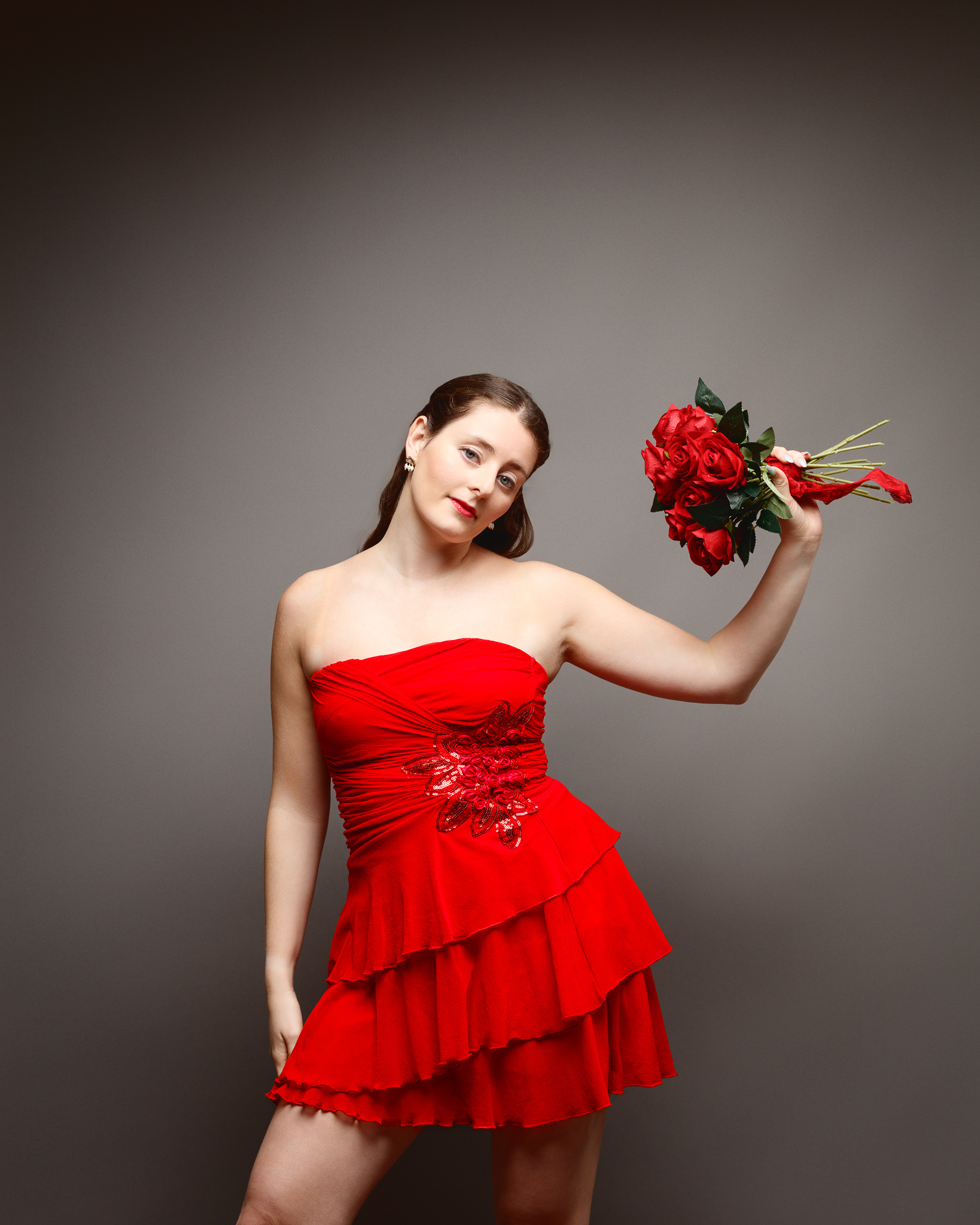
The second look shifted into something more modern and graphic. It was a red cotton sleeveless dress, supported by net petticoats. Sophia wore red court patent shoes, red stone drop earrings, and a red hair band.
This look is a good example of how styling cohesion works in a portrait. It is not matching for the sake of it. Every red element has a job to do.
The shoes and earrings did two things:
- They repeated the red theme in small, controlled points
- They helped the viewer’s eye travel through the image
Net petticoats are also interesting on camera. They add a layered feel, even when the dress is still. They create a sense of depth in the skirt. That depth matters in studio portraits, where the background is often simple and the main subject needs dimensionality.
For pose and expression, I like to avoid predictable choices with a bold red dress. Red can be playful, but it can also be strong and direct. Sophia leaned into a more editorial tone here, with controlled expression and clean lines in the shoulders and hands. It kept the set from feeling like a themed party shoot. It stayed in the world of portrait and fashion imagery.
This set also taught me a useful lesson about red cotton. Under soft light, cotton can go flat if I am not careful. I want enough shape in the light to show folds and texture, while keeping skin flattering and the background clean. That balance is easier to judge in a test shoot, because I can slow down and refine it.
Dress 3: Red silk and chiffon with diamanté panel and controlled sparkle
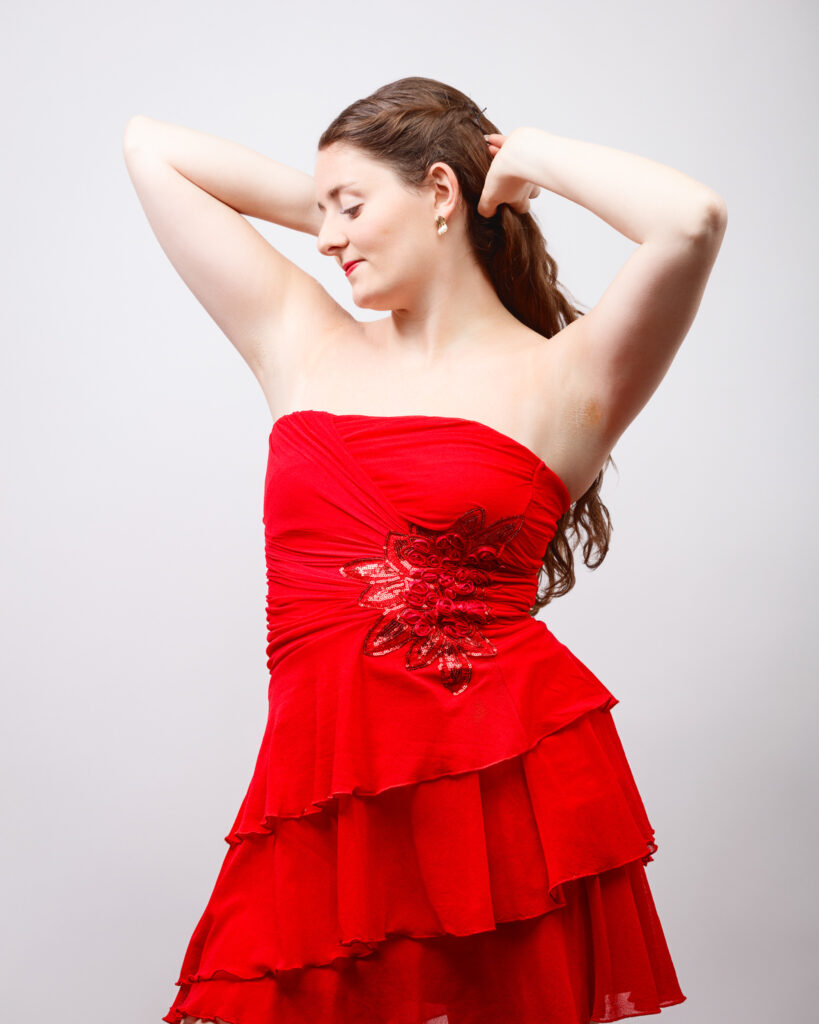
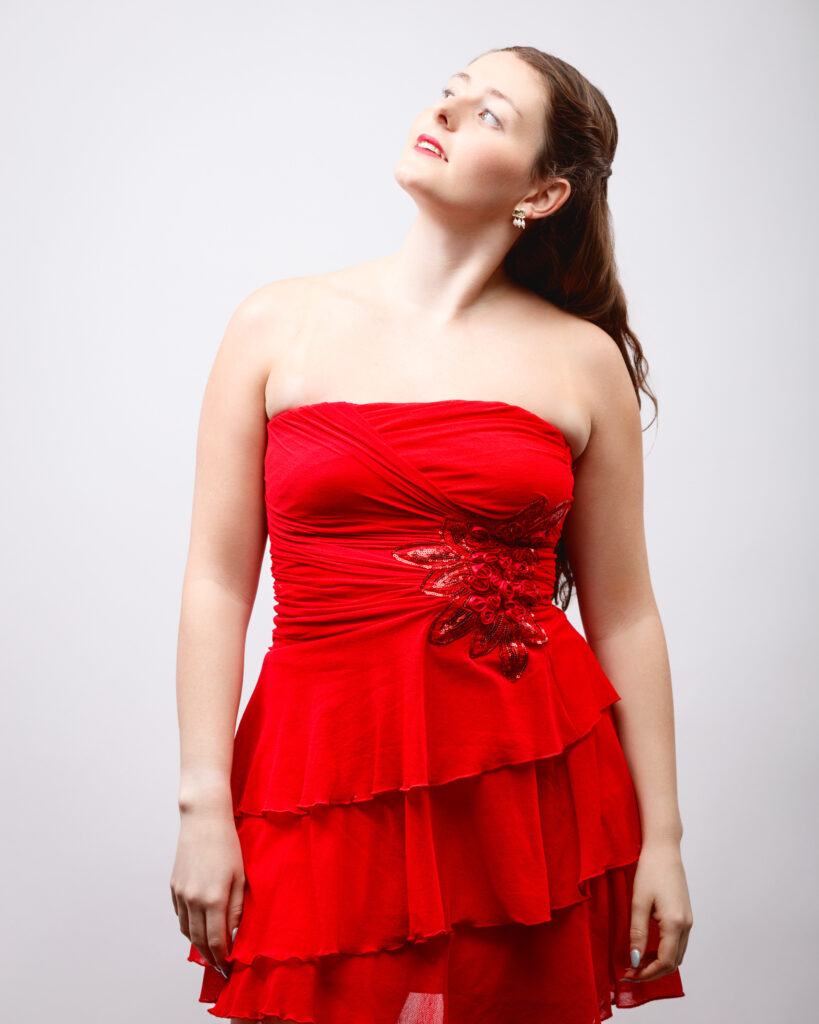
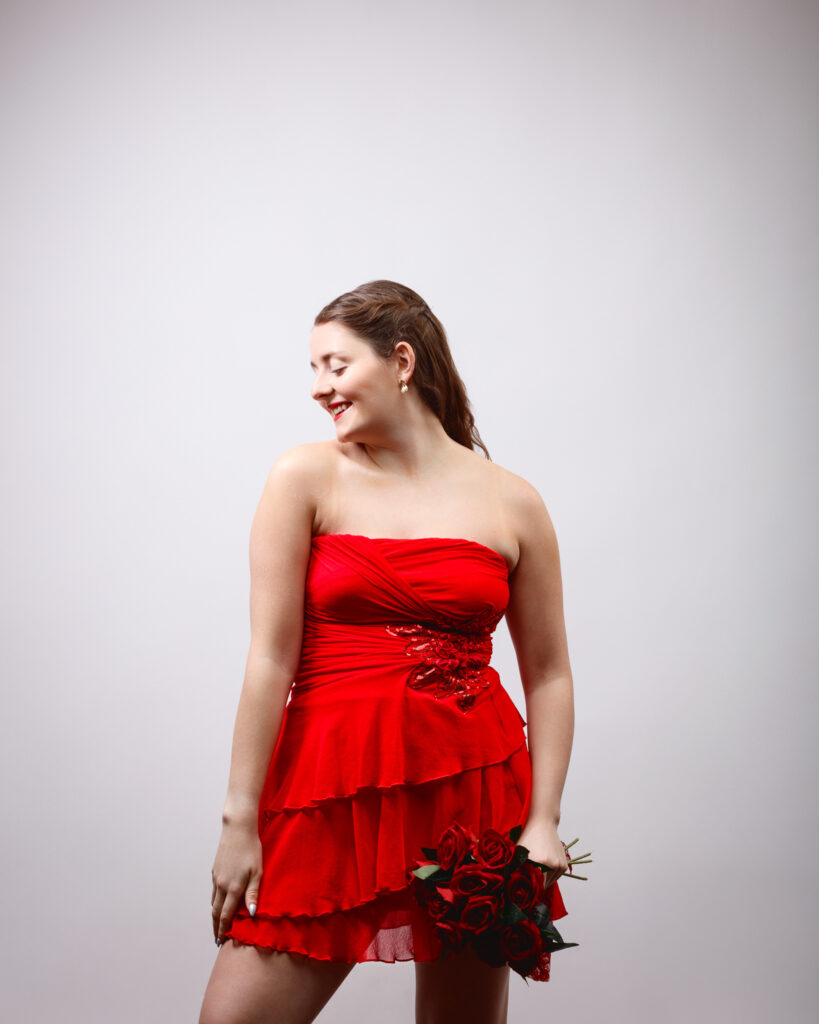
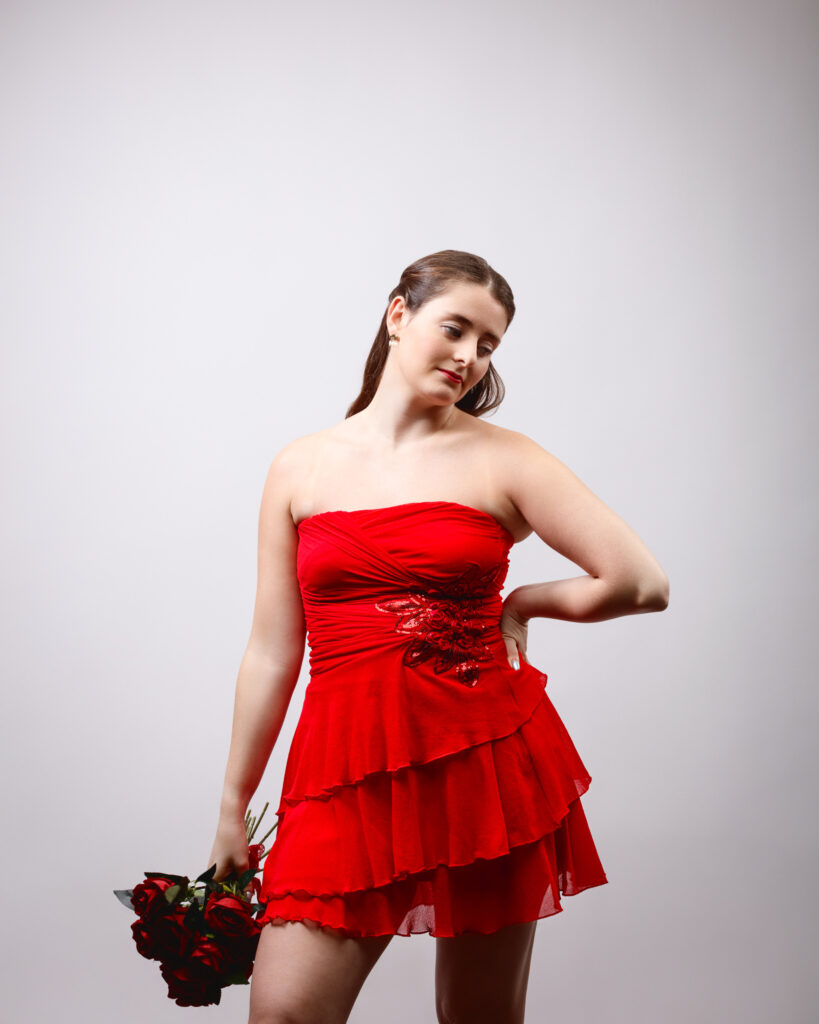
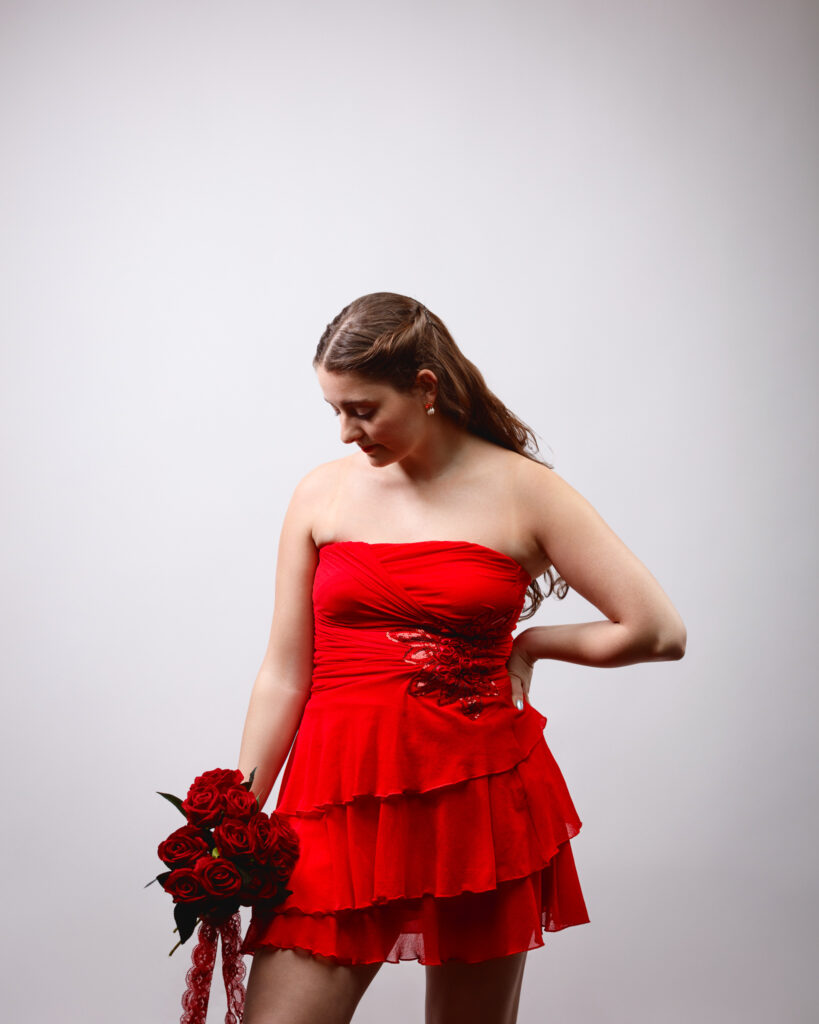
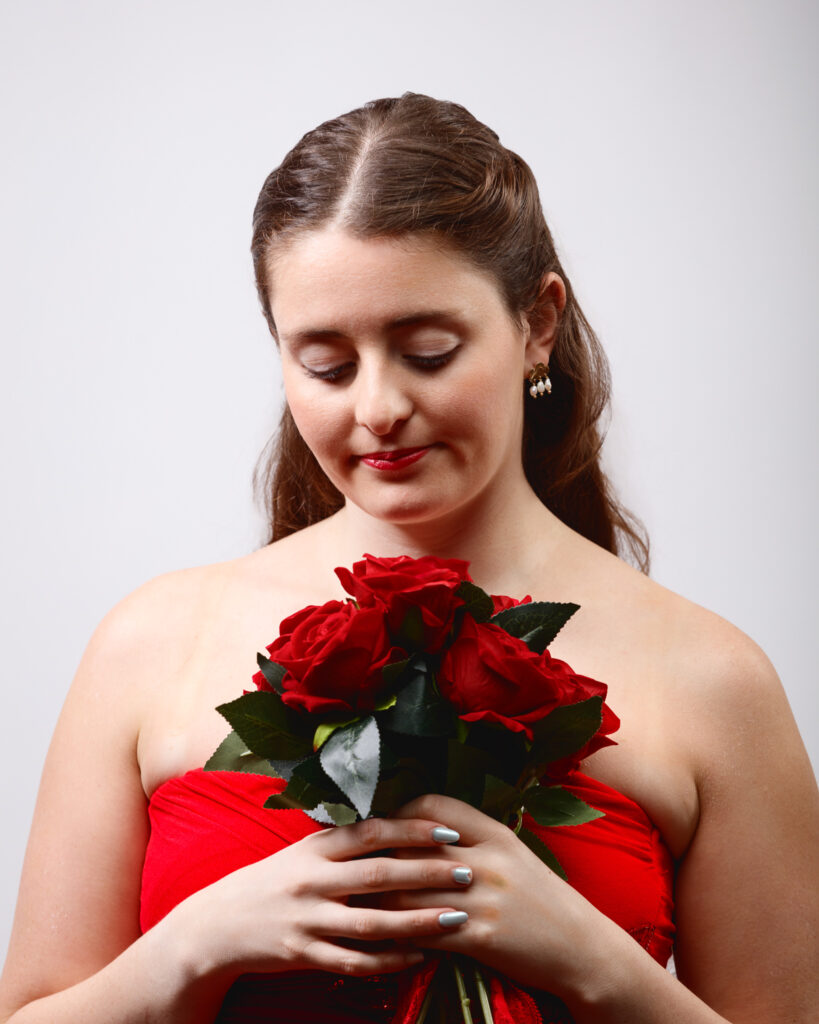
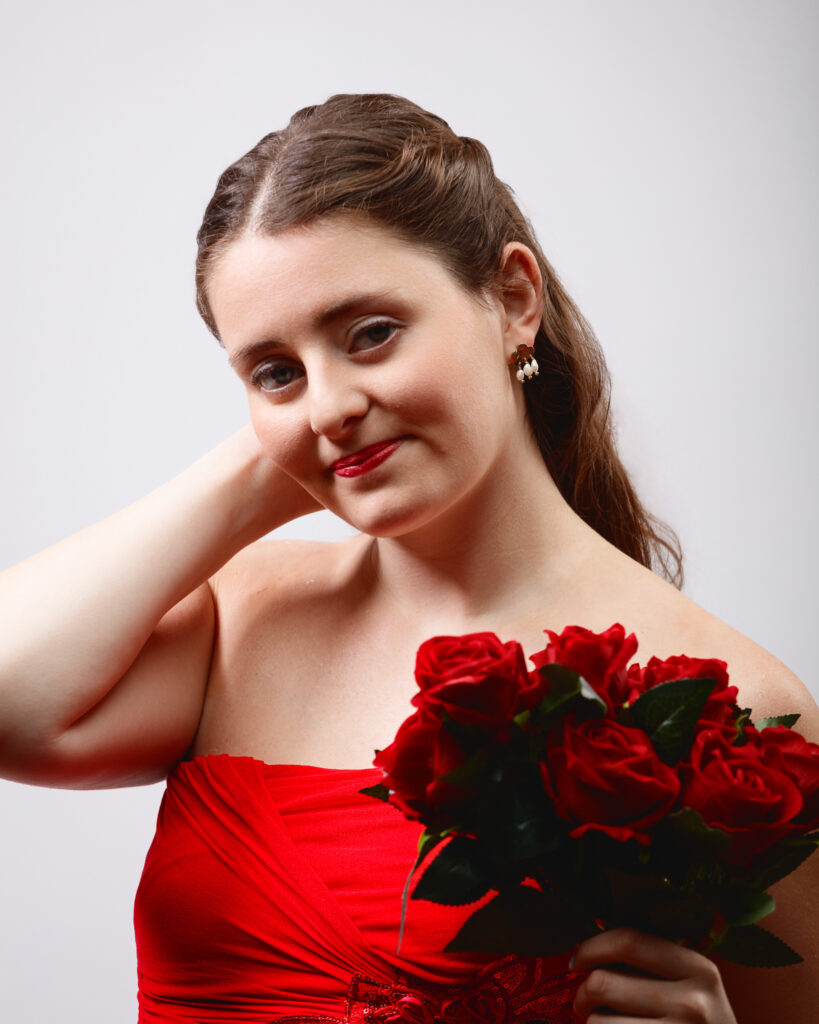
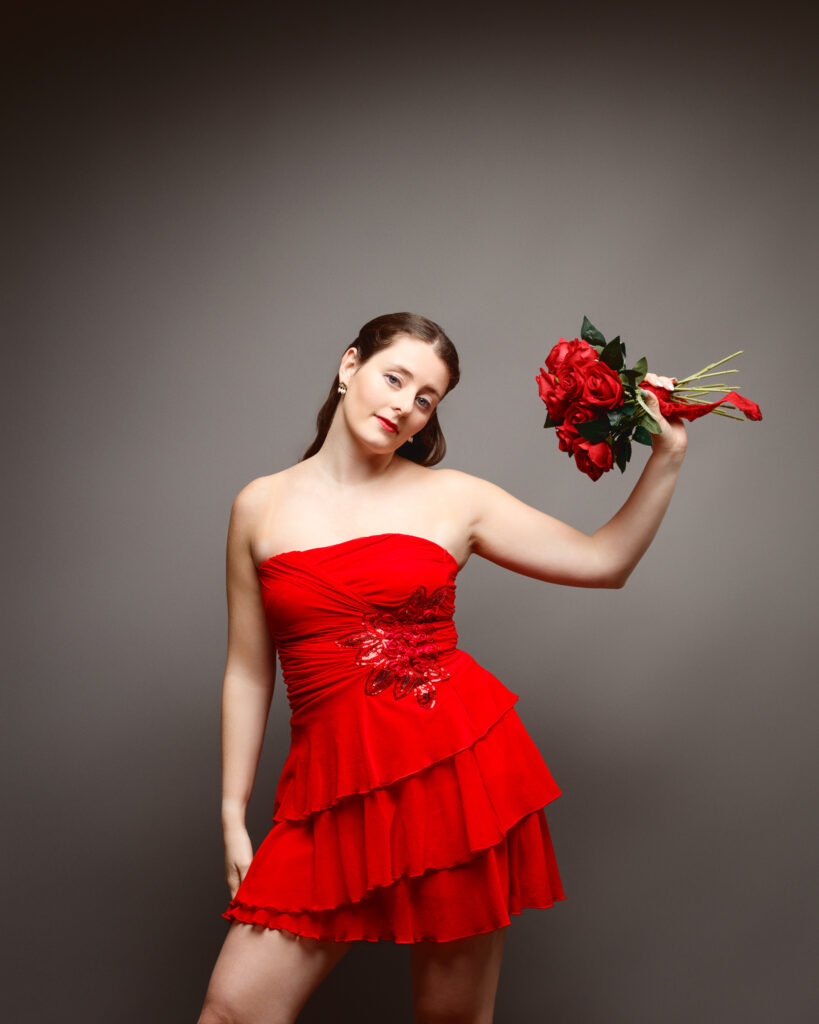
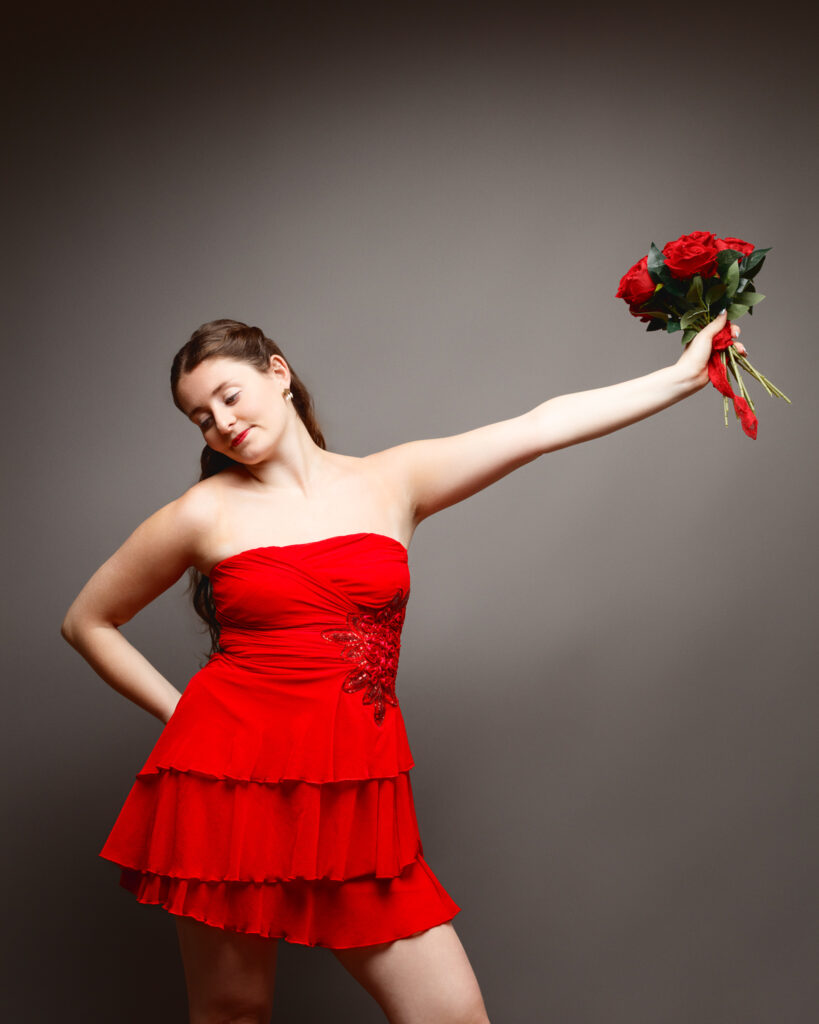
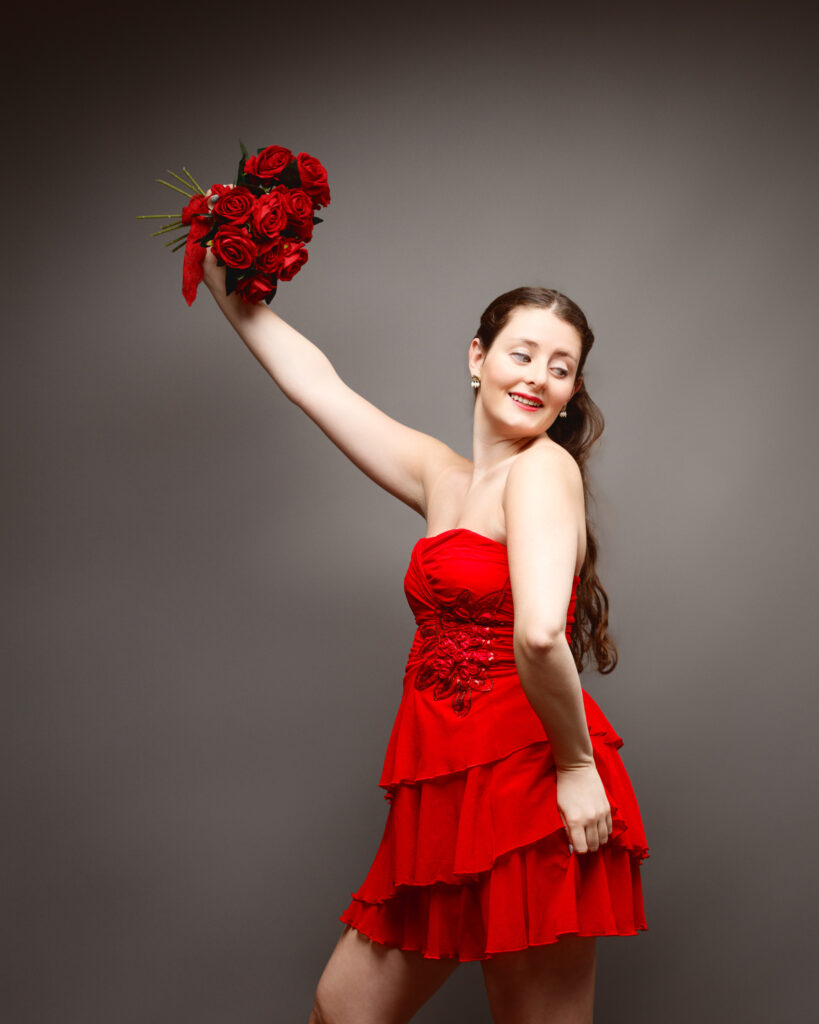
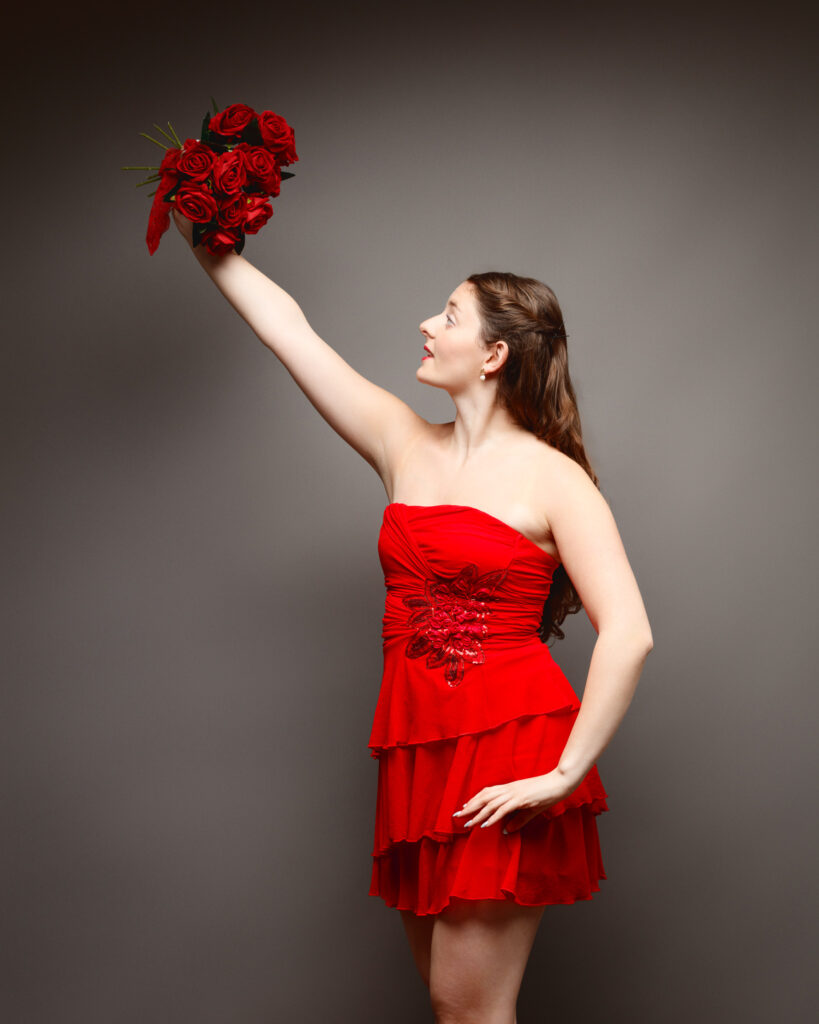
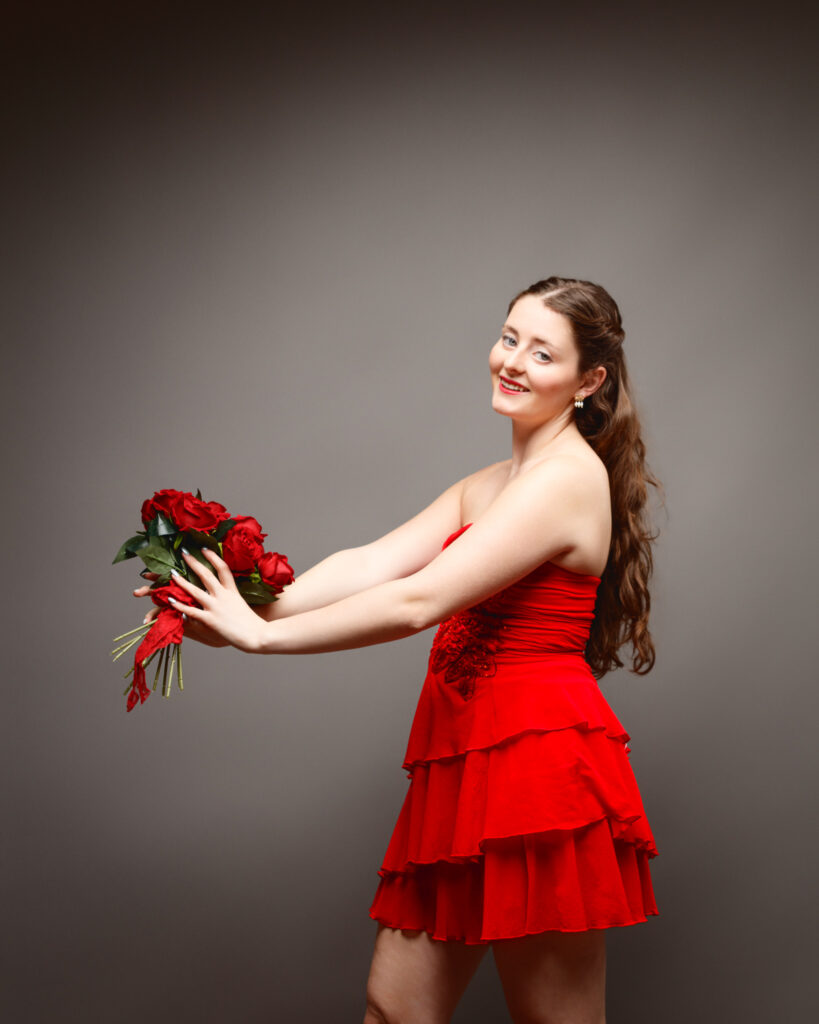
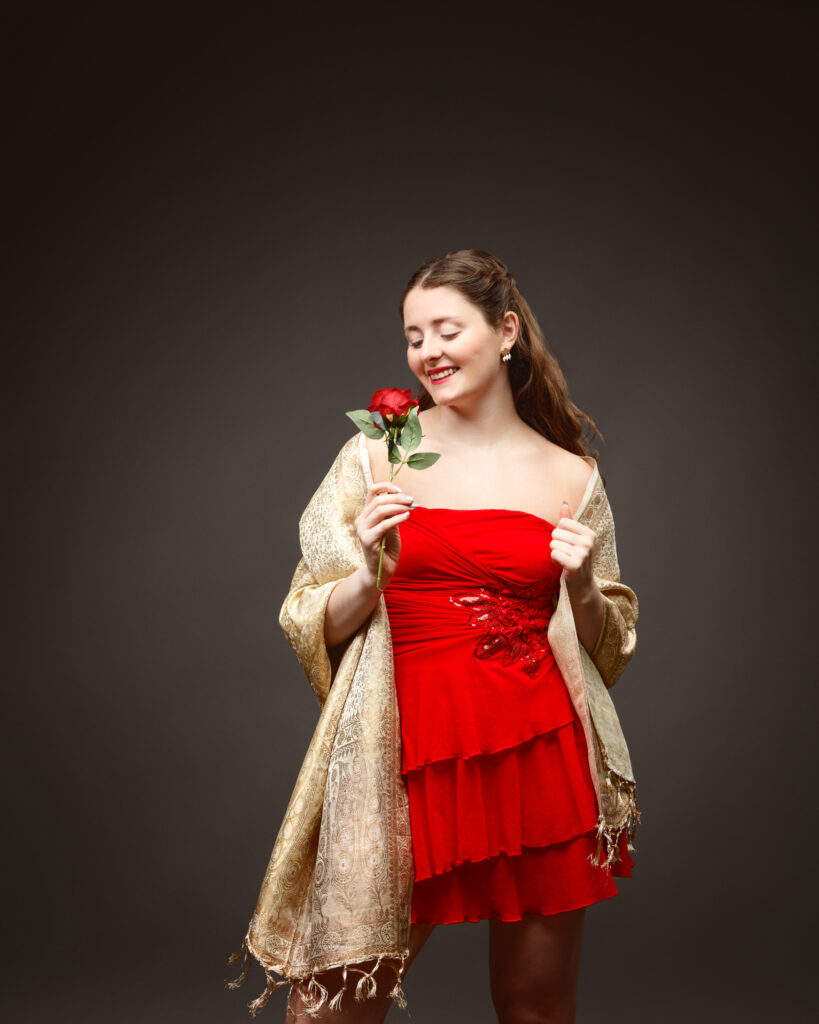
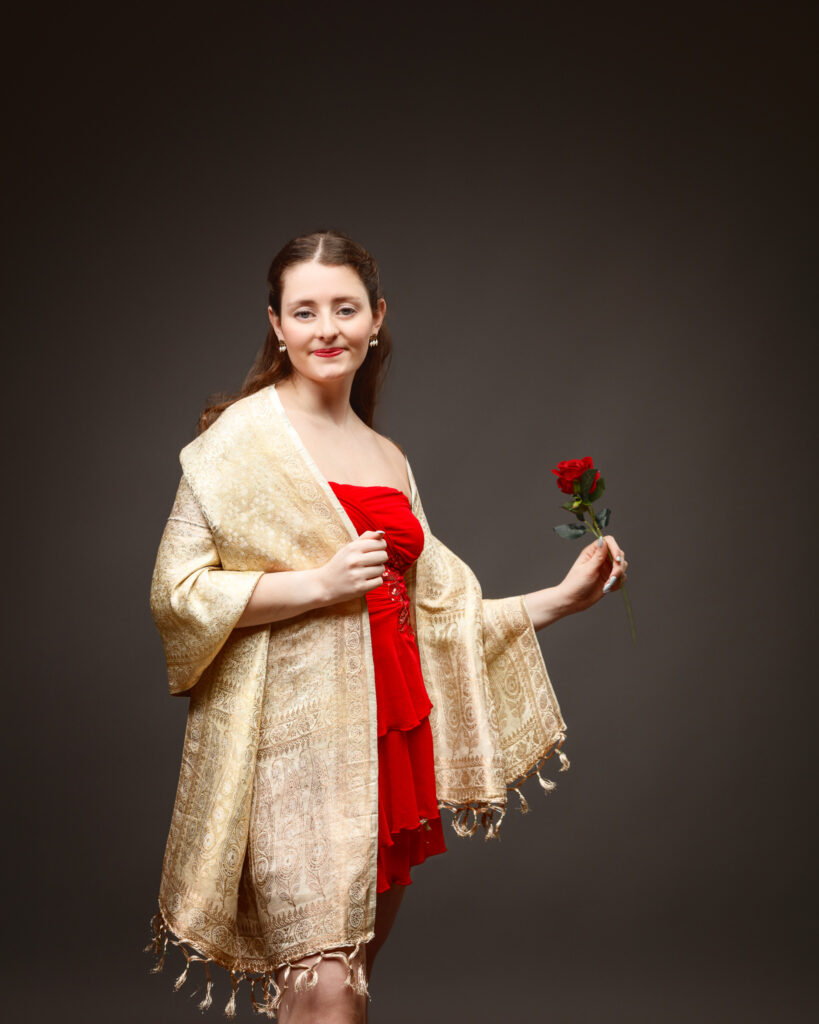
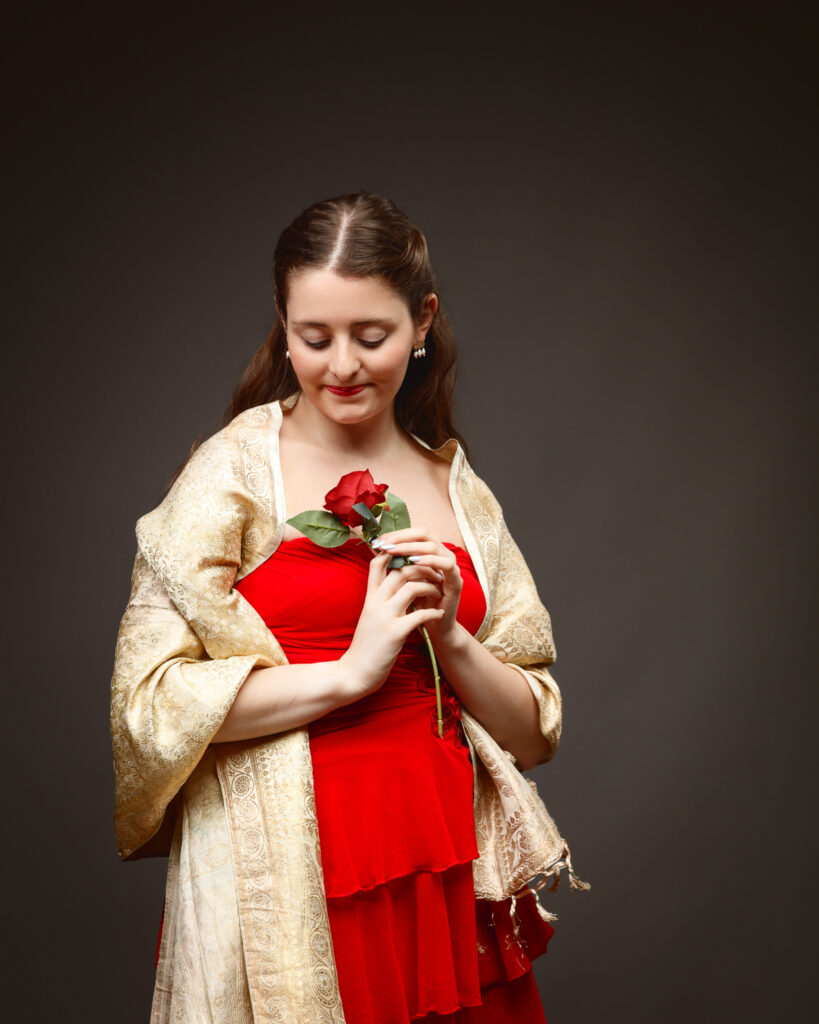
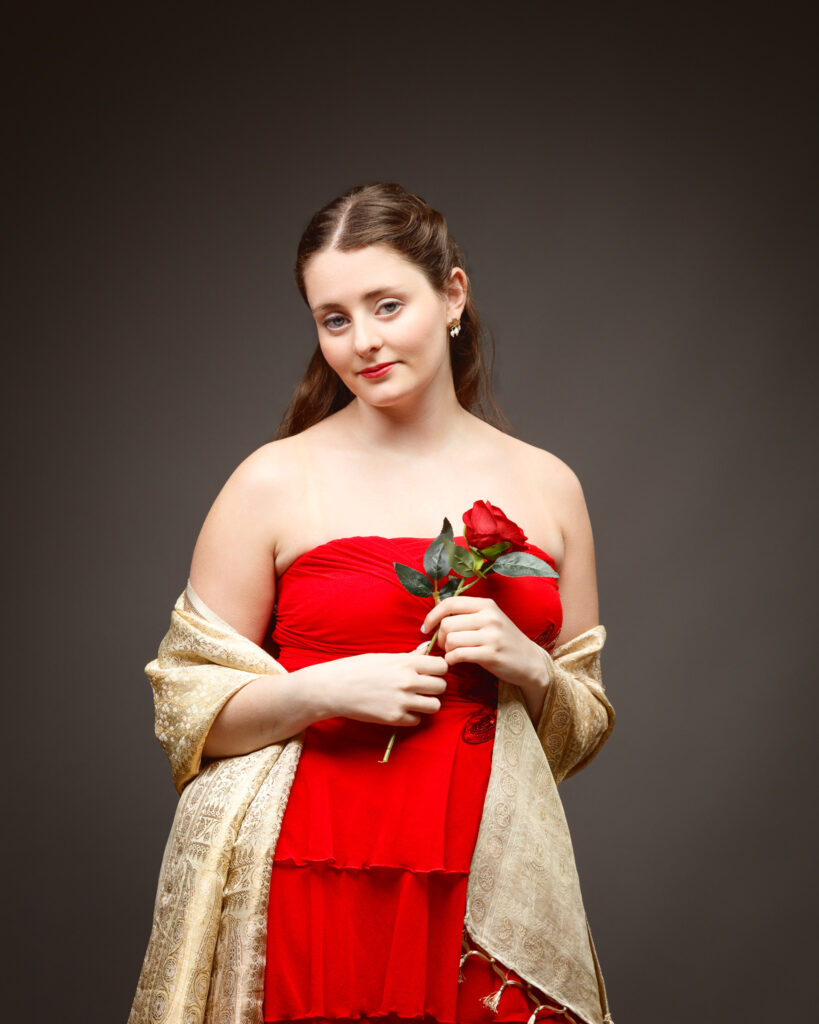
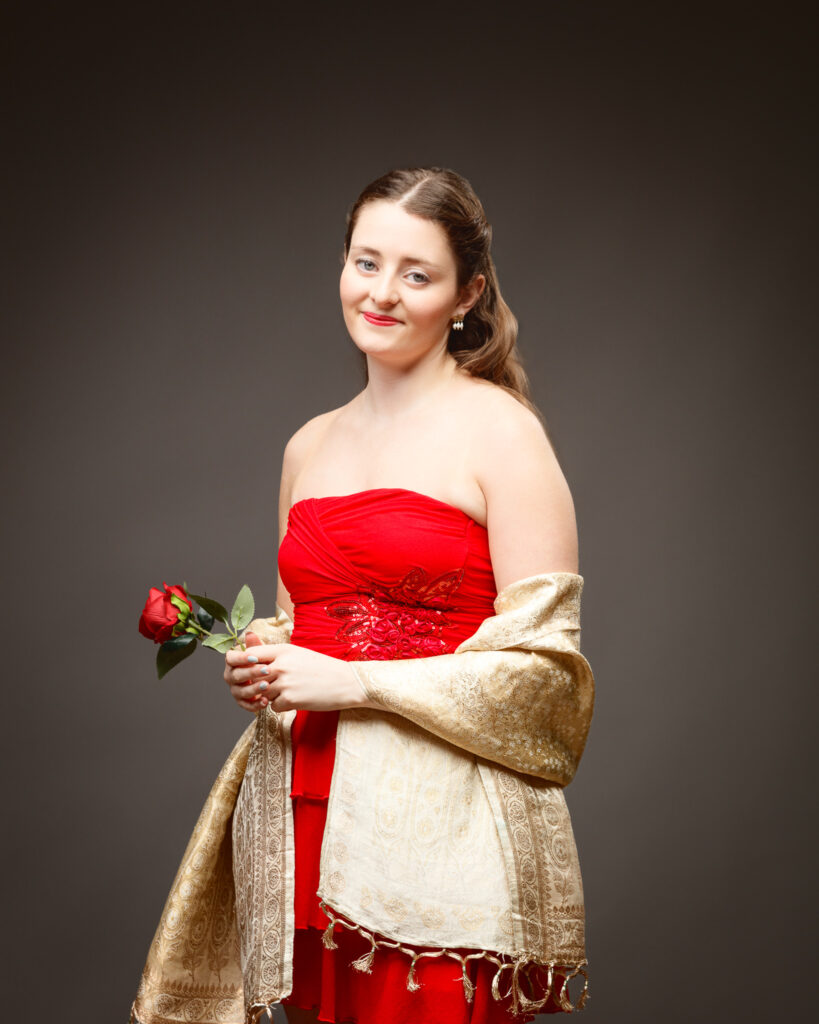
The third dress was the most demanding from a technical point of view, but it was also the most rewarding. It was a red silk and chiffon short dress with a diamanté jewel panel. Sophia wore gold and pearl earrings, a gold silk shawl, and black and silver bow shoes.
Silk, chiffon, and diamanté create a challenge. They all respond to light in different ways.
- Silk can throw bright highlights quickly
- Chiffon can look soft and airy, but it can also lose shape if light is too flat
- Diamanté can create small “hot spots” that pull attention away from the face
- A gold shawl adds another reflective surface to manage
This is where a test shoot earns its keep. On a client job, I would still handle it, but I would not necessarily have the time to explore it deeply. Here, I could try small changes and see exactly what they did to the final image.
The aim was to control the sparkle rather than remove it. The diamanté should read as detail, the silk should glow rather than glare, and the shawl should add warmth and shape instead of a bright strip that steals attention.
Sophia’s posing mattered a lot in this set. Small angle changes affect reflective fabrics dramatically. A slight wrist turn can catch light in a way that feels messy. A minor chin change can shift highlight placement across the face. This is why I value a calm pace. It lets me refine micro-decisions that improve the final image more than any big change would.
Roses and a gift box, used with restraint
We included roses and a gift box as light props. I treat props as tools, not centrepieces. Their job is to support gesture and narrative, not take over the frame.
Roses work well because they create:
- A clean line through the image
- A natural hand placement and purposeful grip
- A colour accent that sits comfortably with Valentine styling
A gift box suggests giving and anticipation, and that is enough story for a portrait series. The viewer only needs the hint of a moment, not the full plot.
If you are building a themed shoot, this is a useful principle. Choose props that guide the model’s hands and posture. Avoid props that demand attention.
What I learned from the three dresses
I like to end a test shoot with a short list of lessons, because that is what makes it worth doing.
Here is what I am taking forward:
- Simple backgrounds improve creative decision-making because they remove distractions.
- Red needs careful exposure control to keep texture and avoid clipping.
- Period styling reads better with calmer posing and softer posture choices.
- Net petticoats add depth and movement cues, even in still portraits.
- Reflective fabrics reward slow, precise changes in pose and light.
- Accessories should earn their place. If they do not add, they should go.
All of these are notes I can apply directly to future Elegant Exposures sets, and also to client work where wardrobe, fabric, and tone matter.
The three looks at a glance
| Look | Dress and materials | Styling details | What it tested |
|---|---|---|---|
| Dress 1 | Late 1700s peasant style, white and red cotton, petticoats | Gold heart locket | Period feel, silhouette control, gentle narrative |
| Dress 2 | Red cotton sleeveless dress, net petticoats | Red patent shoes, red earrings, red hair band | Cohesive colour styling, texture in cotton, editorial posture |
| Dress 3 | Red silk and chiffon short dress, diamanté panel | Gold and pearl earrings, gold shawl, bow shoes | Highlight control, sparkle management, micro-adjustments in pose |
Planning your own test shoot
If you are thinking about your own test shoot, keep it tight. A good test shoot does not need a huge set. It needs a clear question.
You can ask yourself:
- What am I testing: mood, wardrobe, posing, or lighting?
- What is the simplest background that still supports the theme?
- Which accessory adds meaning without clutter?
- What is the one risk I want to explore safely?
Structure helps, because you change one thing at a time and learn what caused the difference.
Why this shoot belongs in Elegant Exposures
This Valentine dress session fits Elegant Exposures because it keeps the focus on form, styling and portrait intent. Small, deliberate choices rather than big sets. Susan’s styling gives the project its personality, Sophia gives it warmth, and my job is to keep the studio work clean and honest so both come through.
The simple backgrounds were the point. They let the dresses do the talking, and they reminded me why I keep coming back to test shoots. They move the work forward creatively, not just technically.